Unlike greenfield developments, brownfield projects begin with an operating facility that already has years, or even decades of infrastructure, equipment, utilities, and production constraints. Every engineering decision must fit within an existing environment where downtime is expensive, safety risks are higher, and available space is often limited.
This is why multidiscipline engineering coordination in brownfield projects is far more than simply combining engineering disciplines. It requires continuous collaboration between process, piping, mechanical, civil, structural, electrical, instrumentation, and project teams to ensure every modification integrates seamlessly with existing plant operations.
Whether the objective is increasing production capacity, replacing aging equipment, improving process efficiency, or meeting new environmental regulations, successful brownfield revamps depend on coordinated engineering from concept through execution.
In this blog post, we’ll explore the complexities of brownfield engineering coordination, key disciplines, common challenges, best practices, digital tools, engineering deliverables, and Rishabh Pro Engineering’s integrated revamp approach.
What Makes Brownfield Multidisciplinary Engineering Coordination Uniquely Complex
Brownfield facilities rarely match their original engineering drawings. Years of plant modifications, undocumented changes, equipment replacements, and temporary fixes often create discrepancies between documentation and actual site conditions.
Unlike new facilities, engineers must work around:
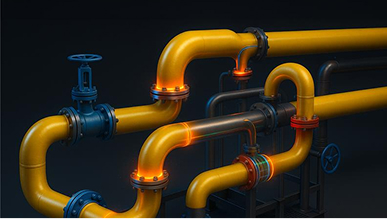
- Existing equipment and piping congestion
- Live process units with limited shutdown windows
- Aging structures and foundations
- Unknown underground utilities
- Restricted access for installation
- Operational safety requirements
- Regulatory compliance during modifications
Because changes in one discipline frequently affect several others, multidiscipline engineering in brownfield projects require significantly greater planning and collaboration than conventional engineering projects.
For example, relocating a process vessel may require:
- Process engineers to redesign process flow
- Piping engineers to reroute connected lines
- Structural engineers to assess support modifications
- Civil engineers to redesign foundations
- Electrical engineers to relocate power systems
- Instrumentation engineers to update control architecture
Without proper coordination, even a seemingly small design modification can trigger costly rework during construction.
Multidisciplinary Engineering Coordination in Brownfield Projects: Disciplines Involved
Effective multidiscipline engineering coordination in brownfield revamps depends on close collaboration among several engineering disciplines throughout the project lifecycle.
- Process Engineering: Process engineers establish the design basis, evaluate process changes, update PFDs and P&IDs, perform hydraulic calculations, and ensure production objectives are met while maintaining plant safety.
- Piping Engineering: Piping engineers develop layouts that accommodate existing equipment, optimize routing, perform flexibility analysis, and ensure constructability within highly congested plant environments.
- Equipment Engineering: Mechanical teams evaluate existing equipment, select replacement systems, review equipment integration, and verify operational compatibility.
- Civil and Structural Engineering: Structural specialists assess existing foundations, steel structures, platforms, and supports while designing reinforcements required for new equipment loads.
- Electrical Engineering: Electrical engineers evaluate existing power distribution, cable routing, load requirements, and electrical upgrades needed to support plant modifications.
- Instrumentation and Control Engineering: Instrumentation engineers coordinate field instruments, control loops, safety systems, cable schedules, and DCS/PLC integration without disrupting plant operations.
- 3D Design and Plant Layout: 3D designers consolidate engineering inputs into an intelligent plant model, enabling clash detection, constructability reviews, maintenance accessibility studies, and multidisciplinary coordination.
The success of multidiscipline engineering in brownfield revamps depends on every discipline working from a shared understanding of existing conditions and project objectives.
Common Multidisciplinary Engineering Coordination Challenges in Brownfield Revamps
Brownfield modifications introduce engineering challenges that rarely exist in greenfield projects.
- Incomplete Plant Documentation: Legacy drawings often fail to reflect decades of operational changes, increasing the risk of design errors.
- Limited Working Space: Existing plants leave little room for new equipment, piping, cable trays, or structural members, making layout optimization essential.
- Interdisciplinary Design Conflicts: Uncoordinated design updates frequently lead to clashes between piping, structural supports, electrical systems, and instrumentation.
- Shutdown Constraints: Many brownfield upgrades must be completed during tightly scheduled shutdowns, leaving little room for engineering revisions during construction.
- Safety and Regulatory Compliance: Modifications must comply with current industry standards while ensuring continued plant safety during implementation.
- Stakeholder Coordination: Operations, maintenance, engineering, procurement, construction, and contractors all require continuous communication throughout the project lifecycle.
Key Multidisciplinary Engineering Coordination Strategies and Best Practices
Successful multidiscipline engineering coordination in brownfield projects follows structured engineering workflows that reduce uncertainty and improve project execution.
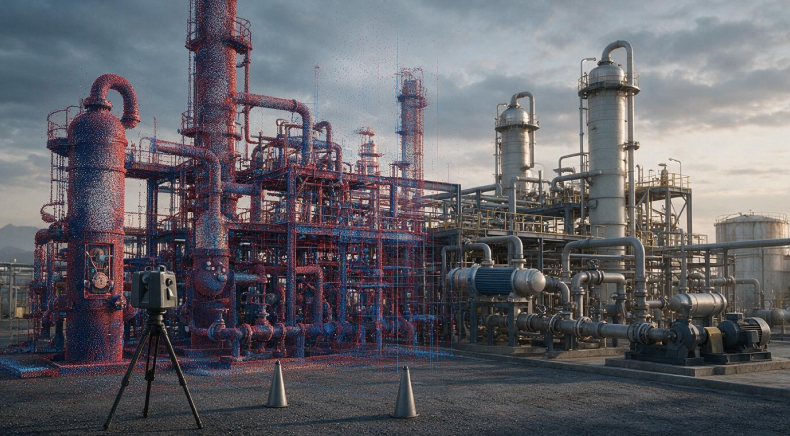
- Begin with Accurate Existing Plant Data: Laser scanning and point cloud surveys provide accurate digital representations of existing facilities, eliminating assumptions during design.
- Establish a Single Engineering Data Source: Using centralized engineering documentation ensures every discipline works with the latest project information.
- Conduct Regular Interdisciplinary Reviews: Periodic design review meetings help identify coordination issues before engineering progresses too far.
- Prioritize Constructability: Engineering teams should evaluate installation sequences, equipment accessibility, lifting paths, and maintenance requirements early in the design process.
- Perform Early Clash Detection: 3D model reviews allow engineers to identify and resolve physical conflicts before fabrication begins.
- Coordinate Deliverables Continuously: Design updates should flow across all engineering disciplines to maintain consistency throughout the project.
Role of 3D Modeling and Digital Tools
Modern brownfield engineering relies heavily on digital technologies that improve collaboration and reduce project risks. Point cloud models generated through laser scanning accurately capture existing plant conditions and provide a reliable foundation for engineering.
Integrated 3D plant models enable teams to:
- Detect piping and structural clashes
- Validate equipment installation space
- Optimize maintenance accessibility
- Coordinate cable routing
- Review constructability
- Visualize modifications before construction
Engineering platforms such as AVEVA E3D, Hexagon Smart 3D, Autodesk Plant 3D, Navisworks, CADWorx, CAESAR II, and intelligent document management systems help synchronize engineering activities across multiple disciplines while improving design quality.
Engineering Deliverables in a Brownfield Coordination Workflow
A coordinated brownfield engineering project typically produces a comprehensive set of multidisciplinary deliverables, including:
- Existing condition assessments
- Laser scan and point cloud models
- Process Flow Diagrams (PFDs)
- Updated P&IDs
- Equipment layouts
- Intelligent 3D plant models
- Piping General Arrangement drawings
- Isometric drawings
- Pipe stress analysis reports
- Structural analysis and calculations
- Foundation drawings
- Electrical single-line diagrams
- Cable routing layouts
- Instrument hook-ups
- Material Take-Offs (MTOs)
- Construction work packages
- Cost estimates and engineering documentation
Maintaining consistency across these deliverables is one of the primary objectives of multidiscipline engineering coordination in brownfield revamps.
How Rishabh Pro Engineering Approaches Multidiscipline Coordination in Brownfield Revamps
At Rishabh Pro Engineering, multidisciplinary collaboration begins with developing a clear understanding of existing plant conditions, operational constraints, and project objectives. Our engineering teams work as an integrated unit, bringing together process, piping, equipment, civil & structural, electrical, instrumentation and control, and 3D CAD modeling expertise to deliver coordinated engineering solutions for complex brownfield facilities.
Using laser scanning, intelligent 3D modeling, detailed engineering reviews, and structured interdisciplinary coordination, we help clients minimize design conflicts, reduce project risks, and improve construction readiness before work reaches the field.
Project Spotlight: Steel Caster Steam Exhaust System Upgrade
Client Challenge
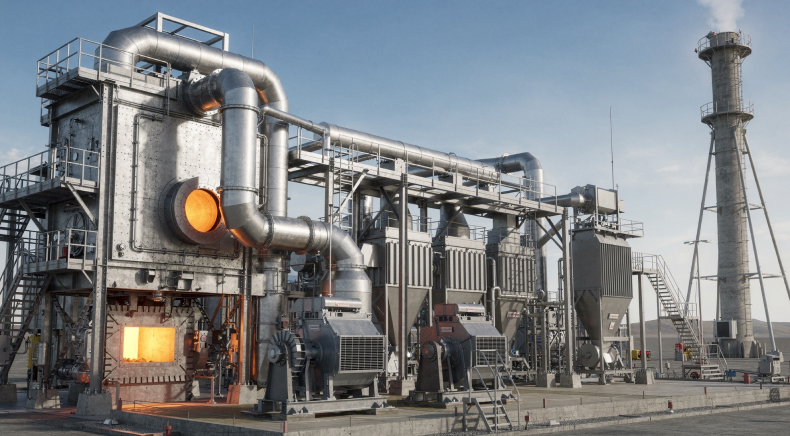
A steel manufacturer was experiencing steam overload within its caster area, affecting operational efficiency, equipment reliability, and workplace safety. Since the upgrade had to be executed within an operating brownfield facility, the new exhaust system needed to integrate seamlessly with existing structures, utilities, and process equipment while minimizing engineering risks during detailed design and implementation.
Engineering Solution
Rishabh Pro Engineering executed a multidisciplinary basic engineering package by integrating process, mechanical, civil, structural, electrical, instrumentation, and 3D design expertise into a coordinated workflow.
The steel caster steam exhaust system upgrade engagement included:
- Reviewing point cloud data and recommending additional laser scanning to validate existing plant conditions.
- Updating P&IDs to reflect the proposed steam exhaust modifications.
- Developing a coordinated 3D layout for ductwork, major equipment, and exhaust routing.
- Performing structural assessment of existing steelwork to evaluate additional loading requirements.
- Designing foundations for support towers, induced draft fans, and exhaust stacks.
- Preparing preliminary civil and structural fabrication deliverables.
- Developing electrical load lists, Single Line Diagrams (SLDs), and equipment power requirements.
- Preparing preliminary instrument lists and I/O schedules.
- Generating Material Take-Offs (MTOs) and comprehensive project cost estimates to support the next phase of detailed engineering.
Key Deliverables
- Existing plant assessment using point cloud data
- Updated P&IDs
- 3D equipment and ductwork layouts
- General Arrangement (GA) drawings
- Structural analysis of existing infrastructure
- Civil foundation design package
- Preliminary fabrication drawings
- Electrical engineering package
- Instrumentation engineering package
- Material Take-Offs (MTOs)
- Budgetary cost estimation
Business Impact
By coordinating multiple engineering disciplines during the basic engineering phase, Rishabh Pro Engineering helped the client establish a technically validated foundation for detailed engineering. The integrated design approach minimized coordination gaps between disciplines, improved constructability, reduced the likelihood of field clashes, and provided greater confidence for project budgeting and execution planning within an operating brownfield facility.
Concluding Thoughts
Brownfield projects demand far more than technical expertise within individual disciplines. They require coordinated engineering that balances existing infrastructure, operational continuity, safety, constructability, and future plant performance.
Organizations that invest in structured multidiscipline engineering coordination in brownfield projects are better positioned to reduce rework, shorten project schedules, improve construction efficiency, and minimize operational disruptions. By combining integrated engineering expertise with digital technologies and collaborative workflows, brownfield revamps can be executed with greater confidence, accuracy, and long-term reliability.