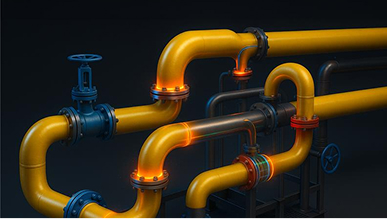
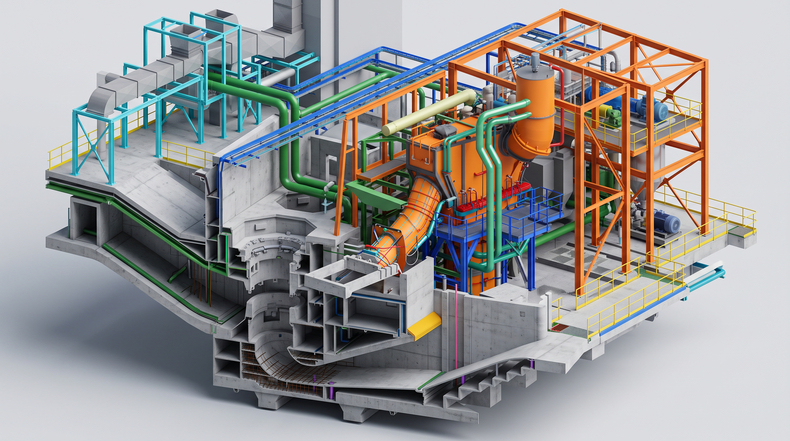
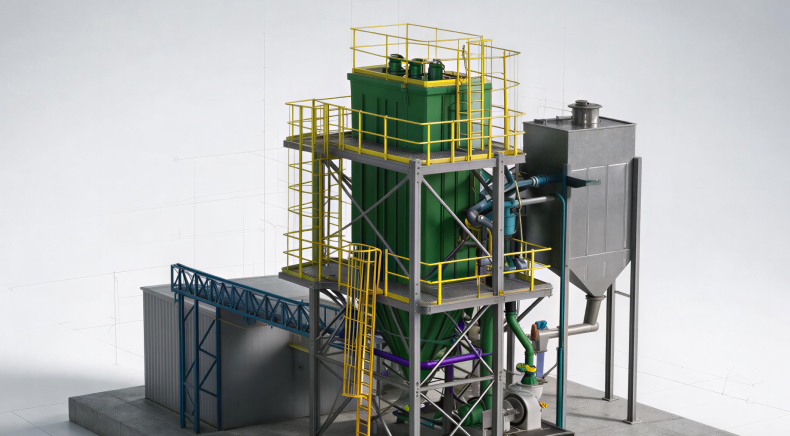
In today’s complex industrial and infrastructure projects, design coordination is no longer a linear process. Multiple disciplines—mechanical, piping, structural, electrical, and instrumentation—work simultaneously, often across geographies and platforms. This multidisciplinary environment introduces a critical challenge: design conflicts that are invisible in 2D but disastrous in execution.
A pipe routing through a beam, insufficient clearance for maintenance, or conflicting installation schedules can lead to rework, delays, and in brownfield environments, costly shutdown extensions. This is where Building Information Modeling (BIM) clash detection plays a pivotal role.
By identifying and resolving conflicts before construction begins, clash detection in BIM enables project teams to move from reactive problem-solving to proactive planning—reducing risks, improving coordination, and ensuring predictable execution.
In this blog, we explore BIM clash detection, covering its types, key processes, benefits, commonly used software, and a comparison between brownfield and greenfield projects. We also discuss common challenges, best practices, and how Rishabh Pro Engineering supports effective clash detection.
What is BIM Clash Detection?
BIM clash detection is the process of identifying spatial and functional conflicts between different components within a BIM environment before construction or installation begins. It involves integrating models from multiple disciplines into a single federated model and analyzing them for conflicts.
These conflicts can be:
- Physical overlaps
- Clearance violations
- Workflow or sequencing conflicts
Clash detection in BIM is not just about finding errors about enabling better design decisions early in the project lifecycle. When combined with technologies like 3D laser scanning and 4D simulation, BIM clash analysis becomes a powerful tool for ensuring constructability and operational efficiency.
Types of Clashes in BIM
Understanding the types of clashes in BIM is essential for effective detection and resolution.
- Hard Clashes: These are direct physical interferences where two components occupy the same space. Example: A pipeline intersecting a structural beam.
- Soft Clashes (Clearance Clashes): These occur when required clearance zones are violated. Example: Insufficient space for valve maintenance or equipment removal.
- Workflow Clashes (4D Clashes): These involve conflicts in scheduling, sequencing, or logistics. Example: Two teams scheduled to work in the same confined area simultaneously.
Each type of clash requires a different resolution approach, making classification a key step in BIM clash analysis.
BIM Clash Detection Process
A structured process of clash detection in BIM ensures that conflicts are systematically identified and resolved.
Step 1: Data Collection and Model Preparation
- Gather models from all disciplines
- Ensure correct formats and coordinate alignment
- Validate model quality
Step 2: Model Federation
- All discipline models are integrated into a single environment.
- This creates a unified view of the project for clash detection in BIM.
Step 3: Clash Detection Setup
- Define clash rules (e.g., pipe vs structure)
- Set tolerances and priorities
- Filter relevant elements
Step 4: Running BIM Clash Analysis
- Using BIM clash detection software, the system identifies conflicts across disciplines.
Step 5: Clash Reporting
Clashes are categorized and documented:
- Severity level
- Location
- Responsible discipline
Step 6: Resolution and Iteration
- Design teams resolve clashes
- Models are updated
- Clash detection is re-run
This iterative cycle continues until the design reaches an acceptable level of coordination.
BIM Clash Detection Benefits
The benefits of clash detection in BIM extend far beyond basic design validation—it fundamentally improves how projects are planned, coordinated, and executed.
- Reduced Rework and Cost Savings: By identifying clashes at the design stage, teams can eliminate the need for costly on-site modifications. Resolving issues digitally is significantly cheaper than addressing them during construction, where changes involve labor, material, and schedule impacts. In many cases, effective clash detection can reduce overall project costs by up to 20%, making it a high-return investment.
- Improved Project Timelines: Early conflict resolution ensures that construction activities proceed without unexpected interruptions. This minimizes delays caused by redesign, rework, or site-level coordination issues, helping projects stay aligned with planned schedules, especially in time-sensitive environments like shutdowns.
- Enhanced Safety: BIM clash detection enables validation of clearances, access routes, and equipment handling requirements before execution. By identifying potential hazards in advance, it significantly reduces on-site risks, ensuring safer working conditions during installation and maintenance.
- Better Multidisciplinary Coordination: A shared BIM environment allows all stakeholders, across equipment, structural, electrical, and piping disciplines to collaborate in real time. This eliminates silos, improves communication, and ensures that all teams are aligned on a single source of truth.
- Improved Decision-Making: With clear 3D visualizations and data-driven insights, project teams can make faster and more informed decisions. This enhances design confidence, reduces uncertainty, and supports proactive planning across the project lifecycle.
BIM Clash Detection Software and Tools
You would agree that selecting the right BIM clash detection software is critical for effective coordination.
Listed are the ones commonly used across organizations;
Autodesk Navisworks Manage
Widely used for:
- Model aggregation
- Clash detection in BIM
- Reporting and coordination
Autodesk Revit
Autodesk Revit is Used for:
- Creating parametric BIM models
- Discipline-specific design development
ClearEdge3D EdgeWise
It enables;
- Conversion of point cloud data into BIM components
- Bridges reality capture with design
BIM Clash Detection in Brownfield vs Greenfield Projects
The role of clash detection varies significantly between project types. Clash detection in BIM is essential in both project types, but its role varies based on project environment, data availability, and execution complexity.
In Greenfield Projects
- Design from Scratch: All systems are newly planned, with no existing infrastructure constraints.
- Focus on Interdisciplinary Coordination: Clash detection primarily identifies conflicts between:
- Piping
- Structural elements
- Electrical and instrumentation systems
- Higher Design Control: Engineers have flexibility to adjust layouts, making clash resolution easier and faster.
- Lower Uncertainty: Since there are minimal unknowns, clash detection outcomes are more predictable.
In Brownfield Projects
- Integration with Existing Infrastructure: New designs must align with already installed systems, structures, and equipment.
- Inaccurate or Outdated As-Built Data: Legacy drawings often do not reflect actual site conditions due to undocumented modifications.
- Space and Accessibility Constraints: Limited working space increases the likelihood of:
- Hard clashes
- Clearance issues
- Installation challenges
- Operational Continuity Requirements: Modifications are often executed in live plants, requiring careful planning to avoid disruptions.
- Higher Safety Risks: Undetected clashes can lead to hazards during installation, lifting, or maintenance activities.
Common Challenges with Clash Detection in BIM
Despite its clear advantages, BIM clash detection is not without challenges. If not managed effectively, these challenges can reduce its impact and slow down project progress.
- Poor Quality Input Models: The accuracy of clash detection In BIM heavily depends on the quality of input models. Incomplete, outdated, or poorly developed models can lead to false positives or missed clashes. For instance, missing elements, incorrect coordinates, or inconsistent modeling standards across disciplines can compromise the reliability of BIM clash analysis. This makes it critical to establish strong modeling guidelines and validation checks before initiating clash detection.
- Data Overload: Large-scale projects often generate thousands of clashes during initial analysis. While this indicates thorough detection, it can overwhelm project teams. Without proper classification and prioritization, critical clashes may get buried under less significant ones. Effective filtering, grouping, and categorization strategies are essential to focus on high-impact issues that directly affect constructability and safety.
- Lack of Coordination: BIM clash detection is inherently a collaborative process involving multiple disciplines. When teams operate in silos or use disconnected workflows, clash resolution becomes slow and inefficient. Delays in communication, unclear ownership of issues, and lack of centralized coordination platforms can extend resolution cycles and impact project timelines.
- Over-Detection: Not every detected clash requires action. Some clashes may be intentional or acceptable within design tolerances. However, without proper rule-setting and filtering mechanisms, teams may spend unnecessary time resolving non-critical clashes. This “noise” reduces efficiency and diverts attention from real risks.
- Resistance to Process Adoption: Transitioning to BIM-based workflows can be challenging for teams accustomed to traditional design methods. Resistance may arise due to lack of training, unfamiliarity with tools, or perceived complexity. Without proper onboarding and change management, the full potential of clash detection in BIM may not be realized.
Best Practices for Effective Clash Detection in BIM
To maximize the value of BIM clash detection and ensure meaningful project outcomes, organizations must adopt a structured and disciplined approach.
- Start Early – Integrate Clash Detection from the Design Phase: Clash detection should not be treated as a final validation step. Initiating it during the early design stages allows teams to identify conflicts when changes are easier, faster, and more cost-effective. Early integration also improves overall design quality and reduces downstream risks.
- Define Clear Rules – Set Clash Priorities and Tolerances: Not all clashes carry the same level of impact. Establishing clear rules—such as discipline-wise priorities, acceptable tolerances, and clash categories—helps teams focus on what truly matters. This avoids unnecessary noise and ensures efficient resolution workflows.
- Use Accurate Data – Incorporate Laser Scans for Brownfield Projects: The accuracy of clash detection depends heavily on the quality of data input. In brownfield environments, integrating 3D laser scan data (point clouds) ensures that models reflect actual site conditions. This significantly reduces false positives and improves the reliability of clash analysis.
- Adopt Iterative Workflows – Continuously Refine Models: Clash detection in BIM is an ongoing process rather than a one-time activity. Teams should adopt iterative workflows where models are regularly updated, revalidated, and refined. This continuous improvement cycle ensures that new clashes are identified and resolved as the design evolves.
- Enable Collaboration – Use Shared Platforms for Coordination: Effective clash resolution requires seamless collaboration across disciplines. Using shared, cloud-based platforms enables real-time issue tracking, transparent communication, and faster decision-making. It ensures that all stakeholders are aligned and working with the latest data.
- Focus on Critical Clashes – Prioritize High-Impact Conflicts: Large projects can generate thousands of clashes, but not all require immediate attention. Prioritizing critical clashes—those affecting safety, constructability, or major systems—helps teams allocate resources effectively and maintain project momentum.
How Rishabh Pro Engineering Helps with Clash Detection in BIM
At Rishabh Pro Engineering, BIM clash detection is not treated as a standalone coordination activity—it is embedded into the overall engineering and execution strategy to ensure designs are not just clash-free, but also constructible, safe, and shutdown-ready.
Integrated, Reality-Driven Modeling Approach
We begin by building a highly accurate digital foundation for clash detection:
- Integrating 3D laser scan data (point clouds) with engineering models to reflect actual site conditions
- Developing federated BIM models across piping, structural, mechanical, and electrical disciplines
- Ensuring all models are aligned, coordinated, and ready for detailed clash analysis
This approach eliminates reliance on outdated drawings and reduces uncertainty from the start.
BIM Clash Detection Aligned with Execution Planning
Our focus goes beyond identifying clashes—we ensure they are resolved in the context of real project constraints:
- Performing detailed BIM clash analysis with defined priorities and tolerances
- Validating installation feasibility, access, and maintainability
- Incorporating model simulation to assess sequencing, crane movements, and equipment handling
This ensures that designs are practical and executable, not just theoretically correct.
Optimized for Brownfield and Shutdown-Driven Projects
For brownfield environments, we bring a strong execution-oriented perspective:
- Identifying clashes that impact shutdown scope and duration
- Supporting pre-shutdown modifications to reduce on-site workload
- Ensuring minimal disruption to ongoing plant operations
Collaborative and Transparent Delivery
We enable efficient coordination across all stakeholders:
- Using shared platforms for real-time clash tracking and resolution
- Providing clear, actionable clash reports with ownership and priority
- Driving faster decision-making through continuous coordination
Outcome-Focused Engineering
Our approach is designed to deliver measurable results:
- Reduced rework and cost overruns
- Predictable and optimized project timelines
- Improved safety during installation and operations
Industry Applications of BIM Clash Detection
Clash detection in BIM is widely adopted across multiple industries where complex, multidisciplinary systems must be integrated with precision and minimal risk.
- Oil & Gas: In upstream, midstream, and downstream facilities, BIM clash detection is critical due to dense piping networks, structural frameworks, and safety-critical systems. It helps identify interferences in offshore platforms, refineries, and pipelines—ensuring safe installation and minimizing shutdown risks during expansions or revamps.
- Refinery & Petrochemicals: These facilities involve highly interconnected processing units with strict operational and safety requirements. Clash detection in BIM ensures that equipment layouts, pipe routing, and maintenance clearances are properly planned, reducing the risk of operational disruptions and hazardous conflicts.
- Power & Utilities: In thermal, nuclear, and renewable energy plants, BIM clash detection supports coordination between mechanical systems, electrical routing, and structural components. It is especially valuable in turbine installation, cable tray routing, and retrofit projects where precision is critical.
- Manufacturing: Modern manufacturing plants rely on optimized layouts for machinery, material handling, and workflow efficiency. Clash detection in BIM helps prevent spatial conflicts, ensuring smooth installation of equipment and uninterrupted production processes.
Final Words
BIM clash detection has evolved from a simple design‑validation exercise into a strategic enabler for modern engineering projects. When integrated seamlessly with advanced 3D CAD modeling services, clash detection becomes a powerful mechanism to proactively identify risks, enhance multidisciplinary coordination, and significantly reduce costly rework. The ability to visualize, analyze, and resolve conflicts early in the design phase leads to greater predictability in execution, improved safety, and optimized project costs. This capability is especially critical in brownfield environments, where space constraints, legacy infrastructure, and operational continuity add layers of complexity. Supported by accurate data, collaborative workflows, and execution‑focused planning, clash detection in BIM empowers project teams to deliver with confidence, making it not just a best practice, but a true competitive advantage in high‑risk, high‑stakes projects.
By integrating clash detection into the engineering workflow, organizations can:
- Reduce uncertainty
- Improve coordination
- Ensure predictable execution
In complex environments, especially brownfield projects, this capability becomes a competitive advantage.
Frequently Asked Questions On BIM Clash Detection
Q: How is BIM clash detection different from traditional design review?
A: Traditional design reviews rely heavily on manual checks using 2D drawings, where engineers visually inspect layouts to identify potential conflicts. This approach is time-consuming and prone to human error, especially in complex, multi-disciplinary projects. In contrast, clash detection in BIM uses integrated 3D models to automatically identify spatial and functional conflicts across systems. It provides a more accurate, visual, and data-driven method, enabling teams to detect issues early and resolve them efficiently.
Q: When should clash detection be performed in a project?
A: Clash detection should begin in the early design stages and continue throughout the project lifecycle. It is most effective when performed iteratively during conceptual design, detailed engineering, and pre-construction phases, ensuring continuous validation and minimizing late-stage surprises.
Q: Can clash detection eliminate all project risks?
A: While BIM clash detection significantly reduces design-related risks such as spatial conflicts and coordination issues, it cannot eliminate all risks. Execution-related factors like site conditions, workforce coordination, and unforeseen operational challenges still require careful planning and supervision.
Q: How accurate is clash detection in BIM?
A: The accuracy of clash detection depends on the quality and completeness of input models. In brownfield projects, integrating laser scan data improves reliability by reflecting actual site conditions.
Q: Is BIM clash detection only for large projects?
A: No, clash detection in BIM adds value to projects of all sizes. Even smaller projects benefit from improved coordination, reduced rework, and better design clarity, especially when multiple disciplines are involved.