Across process industries, aging facilities are under increasing pressure to improve safety, operational efficiency, asset reliability, and digital readiness. However, decades of retrofits, equipment replacements, and undocumented field modifications often leave engineering teams working with outdated drawings and incomplete facility records, creating risks during revamps, expansions, and shutdown-driven projects. To address these challenges, organizations are increasingly adopting Scan to BIM workflows to create accurate digital representations of existing assets. Reflecting this growing demand, the global Scan to BIM services market is projected to grow from US$ 494 million in 2025 to US$ 706 million by 2032, highlighting its expanding role in industrial modernization and asset lifecycle management.
In this blog post, we’ll explore the growing documentation challenges in brownfield industrial facilities, understand the Scan to BIM process, industrial use cases, software platforms, benefits, implementation challenges, best practices, and how Rishabh Pro Engineering supports modernization projects through point cloud-driven engineering workflows.
The Documentation Challenge in Existing Industrial Facilities
Most aging industrial assets have evolved continuously over time. Production upgrades, maintenance-driven modifications, capacity expansions, and operational adjustments often occur faster than documentation updates.
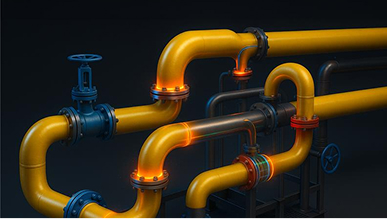
As a result, project teams frequently encounter missing as-built drawings, inconsistent P&IDs, undocumented piping reroutes, unrecorded structural modifications, equipment layout discrepancies, legacy CAD compatibility challenges, and congested plant areas with limited visibility. These documentation gaps can increase engineering uncertainty, create coordination issues, and elevate risks during retrofit, expansion, and modernization projects.
These inconsistencies create serious execution risks during retrofit and modernization projects.
Without accurate field data, design professionals may unknowingly create layouts that conflict with actual plant conditions. This can lead to:
- Costly field rework
- Installation delays
- Construction clashes
- Procurement errors
- Extended shutdown durations
- Increased safety exposure during site verification
Traditional manual measurements are often too slow and unreliable for large operating facilities. This is why many organizations now rely on scan to BIM workflow methodologies to establish accurate digital references before engineering activities begin.
What is Scan to BIM?
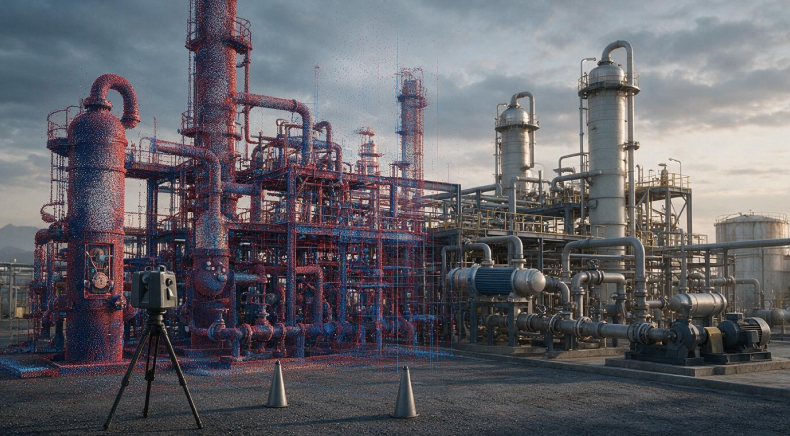
Scan to BIM is the process of capturing real-world site conditions using laser scanners or LiDAR technologies and converting that information into intelligent BIM models or engineering-ready 3D representations. The workflow combines high-density spatial data capture with digital modeling to create accurate virtual representations of industrial environments.
In a typical project, laser scanners capture millions of data points from the facility. These datasets are then processed into point clouds that serve as the foundation for intelligent modeling activities.
The resulting digital models can support:
- Plant retrofits
- Facility revamps
- Equipment replacement projects
- Pipe routing studies
- Structural assessments
- Shutdown planning
- Clash detection
- Digital twin initiatives
- Long-term asset management
Scan to BIM Process for Industrial Projects
A successful Scan to BIM workflow is not limited to scanning and modeling. It requires planning, engineering understanding, data management, quality checks, and clear deliverable expectations. For brownfield industrial projects, the workflow typically includes the following stages.
Step 1: Defining the Project Objective
Before scanning begins, the project team must define why the scan is being performed. The purpose of the model determines the scanning strategy, level of detail, modeling scope, software workflow, and deliverable format. A facility documentation project may require broad as-built coverage. A piping revamp may require detailed modeling around tie-in points and congested pipe racks. An equipment replacement project may focus on foundations, access clearances, utilities, and surrounding structural elements. A digital twin initiative may require asset information to be structured for future operations and maintenance. Clear scope definition helps avoid both under-modeling and over-modeling. It ensures that the final model is accurate enough for its intended use without adding unnecessary cost or complexity.
Step 2: Site Scanning and Reality Capture
In active industrial facilities, successful reality capture begins with careful scan planning. Engineering teams evaluate operational constraints, safety requirements, restricted-access zones, and shutdown schedules to determine optimal scan locations and timing. A well-defined strategy helps maximize data coverage, minimize disruptions to ongoing operations, improve personnel safety, and ensure accurate capture of critical plant areas for downstream modeling activities. Critical areas commonly scanned include:
- Process piping systems
- Equipment arrangements
- Structural steel frameworks
- Pipe racks and platforms
- Cable trays
- Utility corridors
- Storage tanks and vessels
- Congested maintenance zones
The scanning process creates highly accurate spatial datasets without interrupting ongoing operations.
Step 3: Point Cloud Registration
Multiple scan locations are merged and aligned into a unified point cloud environment. This step ensures spatial accuracy across the entire facility and creates a reliable digital reference for downstream modeling activities.
Step 4: Point Cloud Processing
Raw scan data is cleaned and optimized to improve usability. Noise removal, alignment validation, and data refinement help improve model quality and engineering accuracy.
Step 5: Intelligent 3D Modeling
The processed point cloud data is converted into engineering-ready BIM models using specialized industrial design platforms. These models may include:
- Piping layouts
- Structural systems
- Mechanical equipment
- HVAC systems
- Electrical routing
- Instrumentation components
During the modeling phase, appropriate Level of Development (LOD) requirements are established based on project objectives. Defining the required level of detail ensures models contain the right amount of geometric and engineering information needed for design, coordination, fabrication, construction planning, or asset management activities.
Step 6: Validation and Coordination
The digital model is validated against actual field conditions to ensure accuracy before detailed design begins. Multidisciplinary stakeholders can then use the model to improve coordination across piping, structural, mechanical, and electrical scopes.
Step 7: Integration into Engineering Execution
Once validated, the model supports downstream project activities such as:
- Retrofit engineering
- Construction planning
- Clash analysis
- Procurement coordination
- Fabrication planning
- Maintenance strategy development
Scan To BIM Industrial Use Cases
- Retrofit and Revamp Projects: Modernization projects often require integrating new equipment, piping systems, and infrastructure into facilities that have undergone years of undocumented modifications. Scan to BIM provides accurate digital representations of existing conditions, enabling engineers to design around actual site constraints rather than outdated drawings. This improves design accuracy, reduces clashes during installation, and helps accelerate project execution.
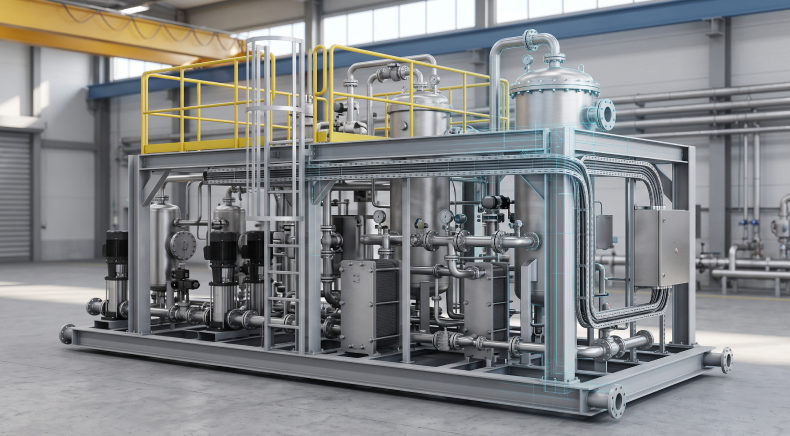
- Equipment Replacement and Layout Modification: Replacing aging equipment within an operating facility can be challenging due to limited space, access restrictions, and surrounding infrastructure constraints. Scan to BIM enables engineering teams to verify clearances, analyze lifting paths, and assess installation feasibility using accurate 3D models. This helps minimize shutdown risks, improve installation planning, and avoid costly field modifications.
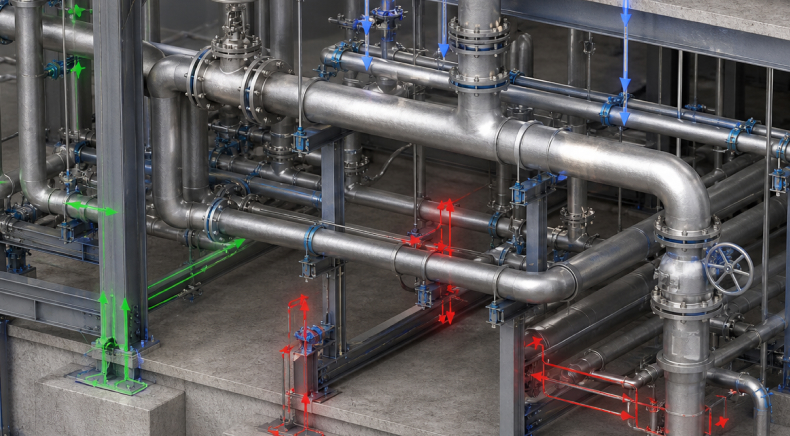
- Piping Rerouting and Tie-In Planning: Process modifications often require rerouting existing pipelines or connecting new systems into operating facilities. Point cloud-based models provide detailed visibility into current piping configurations, equipment interfaces, and available routing corridors. This allows engineers to optimize tie-in locations, reduce interference risks, and improve constructability before field work begins.
- Structural Modification Assessments: Many aging facilities require structural reinforcements or modifications to support new equipment and operational requirements. Scan-based digital models provide accurate structural references that help engineers evaluate existing conditions and identify potential constraints. This supports safer design decisions, reduces engineering assumptions, and improves modification planning.
- Shutdown and Turnaround Execution Planning: Shutdowns and turnarounds operate within tight schedules where even minor installation issues can impact production timelines. Scan to BIM enables project teams to visualize work areas, sequence activities, and coordinate contractor access before shutdown windows begin. The result is improved execution certainty, reduced delays, and more efficient maintenance planning.
- Brownfield Plant Expansion: Expanding production capacity within an existing facility often involves working around operational assets, congested layouts, and limited available space. Reality capture workflows provide accurate facility-wide visibility, helping engineers assess integration requirements and develop optimized expansion strategies. This reduces project risks while improving coordination between new and existing systems.
- Prefabrication Support: Prefabrication strategies depend on accurate field dimensions and installation data to ensure components fit correctly during assembly. Scan to BIM provides precise site measurements that enable fabrication teams to design and manufacture components with greater confidence. This improves fit-up accuracy, reduces on-site adjustments, and helps accelerate construction schedules.
- Digital Twin Development: Many organizations are investing in digital twins to improve asset visibility, maintenance planning, and operational decision-making. Point cloud datasets and intelligent BIM models provide the accurate digital foundation required to create and maintain these virtual asset environments. This supports long-term asset management initiatives while enabling data-driven operational improvements.
Software Platforms Used in Scan to BIM Modeling
Modern industrial modeling projects rely on a combination of laser scanning, point cloud processing, and intelligent 3D design platforms to convert field data into engineering-ready deliverables.
Common software platforms used in Scan to BIM workflows include:
- Point Cloud Registration and Processing: Tools such as Autodesk ReCap, Leica Cyclone, and FARO Scene are commonly used to register, clean, align, and prepare scan data for modeling and review.
- BIM and 3D Modeling: Platforms such as Autodesk Revit help convert point cloud data into structured BIM models for facility documentation, coordination, and asset information management.
- Plant Design and Industrial Modeling: Tools such as AutoCAD Plant 3D, AVEVA E3D, and Hexagon CADWorx support industrial plant modeling, piping layouts, equipment placement, and brownfield modification planning.
- Clash Detection and Coordination: Software such as Navisworks is used to review models, identify clashes, validate constructability, and coordinate proposed designs with existing site conditions.
- Visualization and Project Review: Point cloud and model review platforms help engineering, construction, and owner teams visualize existing conditions, review design options, and make informed project decisions.
- Flexible Workflow Integration: The goal is not to rely on one specific platform but to create a connected workflow that aligns with client systems, project deliverables, and downstream requirements such as retrofit planning, construction sequencing, or digital twin development.
Key Scan To BIM Benefits for Brownfield Industrial Assets
Beyond creating accurate digital models, Scan to BIM delivers measurable value throughout the project lifecycle. From reducing engineering risks and improving coordination to supporting safer execution and long-term asset management, the technology helps organizations make more informed project decisions.
Listed are the core benefits for your reference;
Risk Reduction Before Execution
- Accurate Existing Condition Validation: Laser scanning captures actual field conditions with high precision, helping eliminate reliance on outdated drawings and reducing engineering assumptions during project planning.
- Early Clash Detection and Resolution: Potential conflicts between existing and proposed systems can be identified before fabrication and construction begin, minimizing field rework and costly project disruptions.
Engineering & Coordination Efficiency
- Faster Engineering Decision-Making: Access to reliable digital facility models enables project teams to evaluate design options quickly and accelerate engineering development activities.
- Improved Multidisciplinary Coordination: Shared 3D environments allow piping, structural, mechanical, electrical, and instrumentation teams to work from a single source of truth, improving collaboration and reducing coordination gaps.
Shutdown & Construction Readiness
- Enhanced Construction Planning: Accurate digital models support constructability reviews, installation sequencing, access assessments, and work package development before field execution begins.
- Improved Site Safety and Reduced Field Exposure: By reducing the need for repeated manual measurements and site visits, scan-based workflows help minimize personnel exposure in hazardous and operational plant environments.
Long-Term Asset Value
- Reliable Digital As-Built Documentation: Facilities gain updated digital records that accurately reflect current site conditions, supporting future modifications, maintenance activities, and expansion projects.
- Better Cost and Schedule Predictability: Greater visibility into existing infrastructure helps reduce project uncertainty, improve planning accuracy, and support more predictable modernization outcomes throughout the asset lifecycle.
Challenges in Industrial Scan to BIM Projects and How To Overcome Them
Despite its advantages, laser-based industrial modeling can involve several technical and operational challenges.
Common issues include:
- Large point cloud datasets: Industrial laser scans generate massive files that can slow modeling performance and coordination activities. Optimizing scan segmentation, cloud storage, and data management workflows helps improve usability and processing efficiency.
- Complex data processing requirements: Raw scan data often requires registration, cleaning, and alignment before engineering use. Using experienced specialists and standardized processing workflows helps improve model accuracy and reduce delays.
- Limited access in active operating areas: Ongoing plant operations may restrict scanning activities in hazardous or high-traffic zones. Proper shutdown planning, phased scanning, and safety coordination help improve site accessibility.
- Scan obstructions within congested layouts: Dense piping networks, structural steel, and equipment can block scan visibility. Multiple scan positions and strategic capture planning help improve coverage and minimize blind spots.
- Legacy documentation inconsistencies: Existing drawings and CAD records may not match actual field conditions. Comparing scan data against historical documentation helps identify undocumented modifications before engineering begins.
- High-detail modeling requirements: Industrial projects often demand highly detailed models for fabrication and retrofit planning. Establishing clear LOD requirements early helps balance accuracy, project timelines, and modeling effort.
- Integration with existing engineering systems: Point cloud models must often integrate with multiple design platforms and asset systems. Standardized file formats and coordinated software workflows improve compatibility across engineering disciplines.
Best Practices for Brownfield Scan to BIM Projects
Successful modernization projects require more than accurate scanning and modeling. Following proven scan to BIM best practices help organizations improve data quality, streamline engineering workflows, reduce execution risks, and maximize the long-term value of digital asset models.
Here are some of the common best practices;
- Define Clear Project and Modeling Objectives: Before scanning begins, organizations should clearly identify whether the project supports retrofits, debottlenecking, shutdown execution, asset management, regulatory compliance, or digital twin initiatives. Well-defined objectives help determine scanning scope, model detail requirements, and downstream engineering priorities.
- Prioritize High-Risk and Congested Areas Early: Critical process zones, pipe racks, equipment interfaces, and maintenance-intensive areas should be scanned first to reduce construction uncertainty and improve engineering decision-making in high-impact locations.
- Establish Standardized Engineering and BIM Protocols: Defining LOD requirements, naming conventions, coordinate systems, file structures, and model governance standards early helps maintain consistency across multidisciplinary engineering workflows and improves long-term usability.
- Involve Multidisciplinary Stakeholders During Planning: Early collaboration between piping, structural, mechanical, electrical, instrumentation, operations, and maintenance teams help ensure that scanning activities capture all required engineering data from the beginning.
- Validate Digital Models Continuously Against Actual Site Conditions: Regular field verification and model validation help identify discrepancies early, reducing the risk of design clashes, fabrication errors, and installation conflicts during execution phases.
- Plan To Scan Activities Around Plant Operations and Safety Requirements: Active industrial facilities often involve restricted access zones, hazardous environments, and limited shutdown windows. Coordinated scanning schedules and safety planning help minimize operational disruptions.
- Use Scalable Data Management Strategies: Large point cloud datasets can quickly become difficult to manage without proper storage, segmentation, and collaboration workflows. Structured data management improves performance, accessibility, and long-term project efficiency.
- Integrate Digital Models into Long-Term Asset Lifecycle Workflows: Scan-based models deliver greater long-term value when integrated with maintenance systems, asset management platforms, future retrofit planning, and operational decision-making processes.
- Focus on Engineering-Ready Deliverables Rather Than Visualization Alone: Successful Scan to BIM projects should support actionable engineering outputs such as retrofit design, clash detection, fabrication planning, and construction coordination rather than serving only as visual references.
- Select Technology Platforms Based on Project Complexity and Industry Requirements: Choosing the right combination of laser scanning tools, BIM platforms, and engineering software helps improve interoperability, model accuracy, and multidisciplinary collaboration across industrial modernization projects.
How Rishabh Pro Engineering Supports Brownfield Scan to BIM Projects
Capturing accurate field conditions is only the beginning of a successful industrial modernization initiative. The real value lies in transforming laser scan and point cloud data into engineering-ready deliverables that support retrofit planning, shutdown execution, equipment installation, piping modifications, structural upgrades, and construction coordination within active facilities. In many projects, scan datasets must align with multiple engineering disciplines and operational constraints, making effective integration critical to project success.
This is why organizations increasingly seek multidisciplinary engineering partners capable of bridging the gap between reality capture technologies and practical project execution. At Rishabh Pro Engineering, we combine laser scan-based modeling with expertise across piping, structural, equipment, electrical, and instrumentation engineering to help clients convert complex field data into actionable engineering insights.
Our team delivers comprehensive point cloud to 3D modeling services, enabling industrial organizations to develop coordinated digital models that improve design accuracy, enhance multidisciplinary collaboration, reduce rework risks, and support more efficient brownfield retrofit and revamp execution. By integrating point cloud-driven models into broader engineering workflows, we help clients improve project certainty while maximizing the long-term value of their digital asset data.
Real Life Use Case
Piping System 3D Laser Scanning and Modeling
Client:
A leading industrial facility operator requiring accurate digital modeling support for piping system modification, retrofit planning, and brownfield engineering coordination within an operational plant environment.
Project Overview:
The project involved performing 3D laser scanning and converting captured point cloud data into an intelligent piping system model to support as-built documentation, clash detection, and multidisciplinary engineering activities for an existing industrial facility.
Challenge:
The facility contained congested piping layouts, undocumented field modifications, and limited legacy engineering records, creating challenges in validating actual site conditions and executing retrofit activities without increasing operational or shutdown risks.
Solution:
Rishabh Pro Engineering team carried out high-accuracy laser scanning and processed the point cloud datasets to develop coordinated intelligent 3D models for piping, structural, and equipment systems. During the validation phase, multiple undocumented piping reroutes and structural interferences were identified before fabrication activities began. The scan-based engineering workflow helped reduce potential field rework by nearly 12%, improved shutdown planning efficiency, enhanced clash-free retrofit execution, and provided reliable as-built documentation for long-term asset modernization and future engineering activities.
Final Thoughts
As industrial organizations continue modernizing aging infrastructure, accurate digital visibility has become essential for safe and efficient project execution. Scan to BIM helps transform undocumented facilities into intelligent digital environments that support retrofit planning, clash detection, engineering coordination, and long-term asset management.
For organizations managing complex modernization programs, investing in laser-based digital modeling workflows can significantly improve execution certainty, reduce operational risk, and support more informed engineering decisions throughout the asset lifecycle.
Frequently Asked Questions On Scan To BIM For Industrial Projects
Q: How accurate is laser scanning for industrial facilities?
A: Industrial laser scanning captures highly precise spatial data, often within millimeter-level accuracy. This precision helps engineers create reliable as-built models, detect clashes, validate layouts, and support retrofit planning. Accurate scans reduce field errors, improve coordination, and enhance decision-making throughout industrial engineering and construction projects.
Q: Can Scan to BIM be performed while the plant is operational?
A: Yes, Scan to BIM activities can often be completed while industrial facilities remain operational. Proper safety procedures, access planning, and coordination with plant personnel help minimize disruptions. Phased scanning strategies allow teams to capture accurate site data efficiently without significantly affecting ongoing production or maintenance operations.
Q: How does point cloud data help reduce project rework?
A: Point cloud data provides accurate visual and dimensional information about existing site conditions before engineering begins. This helps identify clashes, undocumented modifications, and space limitations early. Better field visibility improves design accuracy, reduces installation conflicts, minimizes costly rework, and supports smoother project execution and coordination activities.
Q: What is the difference between a point cloud and a BIM model?
A: A point cloud is raw spatial data captured through laser scanning that represents physical site geometry using millions of measured points. A BIM model is an intelligent, structured digital model created from that data, containing engineering information, components, dimensions, and asset details for design and operational purposes.
Q: What types of industrial projects benefit most from Scan to BIM workflows?
A: Scan to BIM workflows are highly beneficial for retrofit projects, plant expansions, shutdown planning, equipment replacements, facility modernization, and digital twin initiatives. These projects require accurate existing-condition data to improve engineering coordination, reduce risks, optimize layouts, and support efficient planning, construction, and long-term asset management activities.
Q: How long does a typical industrial Scan to BIM project take?
A: Project duration depends on facility size, scanning complexity, required model detail, and site accessibility. Small industrial projects may take several weeks, while large facilities can require multiple months. Timelines also vary based on engineering requirements, operational constraints, data processing needs, and stakeholder review and approval processes.
Q: Can scan-based models support future maintenance and asset management activities?
A: Yes, scan-based BIM models support maintenance planning, operational documentation, equipment tracking, and future retrofit activities. Accurate digital models improve asset visibility, simplify inspections, enhance facility management, and provide reliable references for long-term operational decision-making. They also support digital transformation and lifecycle management effectively.
Q: What factors should organizations consider before starting a Scan to BIM project?
A: Organizations should evaluate project objectives, required model detail, operational constraints, plant accessibility, software compatibility, and engineering coordination requirements before starting a Scan to BIM project. Budget, timeline expectations, safety considerations, and long-term asset management goals are also important factors influencing successful project planning and execution.