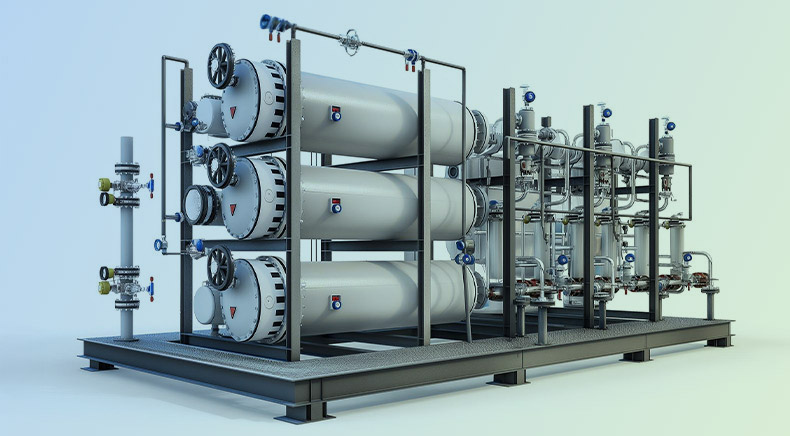
Modular Skid Packages: Types, Benefits and Design Considerations

Modular Process Skid Packages

Home / Blog /

Modular Skid Packages: Types, Benefits and Design Considerations

As industrial projects become more schedule-driven and capital-intensive, owners and EPC companies are under constant pressure to reduce construction timelines, minimize on-site risks, and accelerate plant commissioning without compromising quality. Traditional stick-built construction where equipment, piping, structural steel, and instrumentation are assembled piece by piece at the project site, often leads to longer schedules, higher labor costs, weather-related delays, and greater execution risks.

Modular process skid packages provide a smarter alternative. By designing, fabricating, assembling, and factory-testing complete process units in a controlled manufacturing environment, modular skids significantly reduce field construction activities while improving quality, safety, and installation efficiency. The result is faster project execution, predictable costs, simplified logistics, and quicker time-to-production—making them an increasingly preferred solution for greenfield developments, brownfield expansions, revamps, and remote industrial facilities.

The growing industry’s adoption reflects this shift. According to Straits Research, the U.S. modular process skid market is projected to grow from USD 2.12 billion in 2026 to reach USD 4.58 billion by 2034, growing at a CAGR of 10.4% during the forecast period 2026–2034. This growth is being driven by rising demand across the oil & gas, chemical, pharmaceutical, food & beverage, and manufacturing sectors, where organizations are prioritizing modularization to shorten project schedules, improve operational flexibility, and reduce lifecycle costs.

In this blog, we’ll explore what modular process skid packages are, the different types available, their key advantages over conventional stick-built plants, and why they have become an integral part of modern industrial engineering and EPC project delivery.

What Is A Modular Process Skid?

Modular process skid packages, often called “skids,” are self-contained units that house various components and equipment necessary for a specific industrial process. They are typically compact, standardized units containing essential equipment and parts for industrial processes or applications. These packages are designed and fabricated off-site, often in a controlled environment, and then transported to the installation site. Modular Skids can be integrated seamlessly into existing systems or used to build entirely new processes. By capturing all essential components within a compact and standardized design, skids offer several advantages over traditional on-site construction.

Types of Modular Skid Packages

Several Modular process skid package types are tailored to specific industries and processes. Let’s explore some of the most common modular process skid systems categories:

Types of Modular Process Skids By Industry

  • Chemical Process Skids: Designed for various chemical processes, such as mixing, dosing, and reaction. They often include tanks, pumps, valves, instrumentation, and control systems and are widely used in the pharmaceutical,petrochemical, and food processing industries.
  • Oil and Gas Skid Packages: Essential for the oil and gas sector to manage tasks like gas compression, metering, and filtration. They typically include compressors, separators, valves, and safety systems. They are critical in enhancing efficiency and safety for exploration, production, and refining operations.
  • Water Treatment Skids: Usually employed in municipal water treatment plants, industrial facilities, and desalination plants. They consist of pumps, filters, membranes, and chemical dosing systems. The said packages are pivotal in ensuring a clean and safe water supply.
  • Power Generation Skids: These are crucial in distributed energy systems, usually including generators, switchgear, and control systems. They offer flexibility in supplying power to remote locations or as backup systems.

Types of Modular Skids By Function

  • FPSO Skid Package: Multi-disciplinary Skid Package engineering for chemical injection covers piping, structural, electrical, instrumentation & PLC. This eventually paves the way for the future technologies’ roadmap with the digitization of FPSO Skid Packages with IoT, Data Analytics, Cloud and Edge Computing, AI, and Machine Learning.
  • HVAC Skid Packages: HVAC (Heating, Ventilation, and Air Conditioning) skid packages are utilized in commercial and industrial buildings. They include chillers, boilers, pumps, and control systems. Most importantly, they provide efficient climate control solutions while reducing energy consumption.
  • Pumping Skids: Designed to handle the transfer of fluids, such as chemicals, water, or oil. They often consist of pumps, motors, valves, instrumentation, and associated piping.
  • Heating and Cooling Skids: They provide precise temperature control and, therefore, are crucial components in the chemical processing, pharmaceutical, and food production industries. They typically include heat exchangers, boilers, chillers, and control systems.
  • Filtration Skids: They help remove impurities from liquids or gases and include filters, membranes, and associated instrumentation to ensure optimal filtration performance.
  • Chemical Dosing Skids: These are designed for accurate chemical dosing and are common in water treatment, wastewater management, and industrial processing. They contain dosing pumps, tanks, meters, and control systems.
  • Control Systems and Automation Skids: They house programmable logic controllers (PLCs), human-machine interfaces (HMIs), and other automation equipment. They play a crucial role in optimizing process control and data monitoring.

Benefits of Modular Skid Packages

The adoption of Modular process skid packages is on the rise due to their numerous advantages across various industries. Let’s discuss some of the key benefits:

S. No. Benefits Why It Matters?
1 Reduced Construction Time Compared to traditional on-site construction, which can be time-consuming and subject to weather-related delays. In contrast, skids are fabricated in a controlled environment, significantly reducing construction time.
2 Enhanced Quality and Reliability The skids are constructed in a controlled environment while ensuring consistent quality and adherence to industry standards. Applying rigorous testing and quality control procedures helps minimize the risk of defects or operational issues.
3 Faster Project Execution Time is often of the essence in industrial projects. Skid packages can be fabricated concurrently with site preparation, reducing project timelines. And this acceleration translates into quicker returns on investment.
4 Cost Efficiency Traditional on-site construction of process systems can be expensive, often requiring custom design, extended labor hours, and potential rework. Modular skid packages, on the other hand, leverage standardized designs, reducing engineering costs and the risk of costly errors.
5 Reduced Site Disruption Traditional on-site construction can disrupt ongoing operations. With skid packages, much of the work is done off-site, minimizing disruptions and ensuring the safety of on-site personnel
6 Enhanced Safety Safety is a top priority in industrial settings. Skid packages are designed with safety in mind, incorporating containment systems, emergency shutdowns, and safety interlocks.

Modular Skid vs. Traditional Stick-Built Construction

Modular Process Skids vs Stick Built Construction

Before selecting an execution strategy, plant owners and EPC companies must evaluate factors beyond the initial capital investment. Construction timelines, site conditions, labor availability, quality assurance, safety, and long-term project risks all influence the success of an industrial facility. While traditional stick-built construction has been the industry standard for decades, modular process skid packages offer a more predictable and efficient approach by shifting much of the engineering, fabrication, assembly, and testing to a controlled manufacturing environment.

The comparison below highlights the key differences;

Parameter Modular Process Skid Packages Traditional Stick-Built Construction
Project Cost Lower overall project cost through reduced field labor, fewer construction delays, minimized rework, and shorter commissioning schedules. Higher field labor costs, extended construction periods, and greater exposure to weather delays and project overruns.
Project Timeline Parallel engineering, fabrication, and site preparation significantly reduce overall project duration and accelerate plant startup. Sequential construction activities increase project schedules and delay commissioning.
Quality Control Factory fabrication enables standardized processes, stringent inspections, dimensional accuracy, and comprehensive Factory Acceptance Testing (FAT). Quality depends heavily on site conditions, contractor coordination, and environmental factors, leading to greater variability.
Site Disruption Minimal on-site fabrication and assembly reduce congestion, logistics complexity, equipment movement, and impact on ongoing plant operations. Extensive field fabrication, welding, lifting, and construction activities increase site disruption and coordination challenges.
Safety Controlled workshop environments reduce exposure to hazardous site conditions, working at height, and adverse weather, improving overall safety performance. Higher safety risks due to prolonged on-site construction, multiple contractors, heavy lifting, confined spaces, and weather-related hazards.

Design Considerations for Modular Process Skids

Modular Skid Design Considerations

A modular process skid is much more than equipment mounted on a steel frame. Every skid must be engineered to perform reliably during transportation, installation, commissioning, and years of plant operation. Careful planning during the design phase helps avoid costly modifications later and ensures the skid integrates seamlessly with the overall facility.

Here are some of the most important design considerations:

  • Define the Process Requirements First: Every successful skid begins with a clear understanding of the process. Engineers evaluate the required flow rates, operating pressure, temperature, fluid properties, and production capacity before selecting equipment and developing the layout. These parameters determine the size, configuration, and overall functionality of the skid.
  • Optimize the Layout for Accessibility: A compact skid saves space, but it should never compromise maintenance or operations. Equipment, piping, valves, and instruments should be positioned so operators can safely inspect, service, and replace components without dismantling large sections of the skid.
  • Select Materials That Match the Process: Material selection plays a critical role in reliability and equipment life. Factors such as corrosion, erosion, operating temperatures, pressure ratings, and process media must be considered when choosing piping materials, structural steel, valves, and process equipment.
  • Design for Safe Transportation and Installation: Since modular skids are fabricated off-site, they must withstand transportation loads and lifting operations before reaching the project location. Engineers carefully evaluate skid dimensions, structural strength, lifting points, transportation restrictions, and weight distribution to ensure safe delivery and installation.
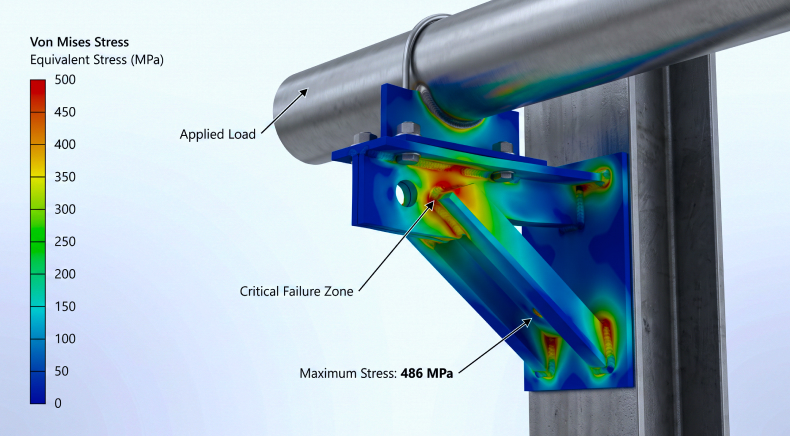
  • Ensure Structural Integrity: The supporting skid structure must safely carry the weight of equipment, piping, process fluids, and operational loads. Structural analysis helps verify stability during transportation, lifting, installation, and normal operating conditions while minimizing vibration and excessive deflection.
  • Plan Piping and Instrumentation Carefully: An efficient piping layout reduces pressure losses, simplifies maintenance, and improves overall plant reliability. Proper valve placement, instrumentation access, drain connections, vents, and isolation points make commissioning and future operations much easier.
  • Consider Safety and Regulatory Compliance: Safety should be incorporated from the beginning, not added later. Modular skids should comply with applicable industry codes and standards while providing adequate emergency isolation, pressure relief, access routes, and protection for personnel operating or maintaining the equipment.
  • Simplify Testing and Future Expansion: One of the biggest advantages of modular construction is that the skid can be assembled and tested before shipment. Designing for Factory Acceptance Testing (FAT) allows most issues to be identified early, reducing site commissioning time. Where possible, engineers should also leave room for future capacity expansion or additional process modules as production requirements evolve.

Rishabh Pro Engineering’s Modular Skid Design Focus

At Rishabh Pro Engineering, we offer focused skid design services for modular process skid and related 3D CAD modeling services to organizations across leading sectors like Oil & Gas (Upstream, Midstream & Downstream), Chemicals, FPSO to suit their equipment skid design requirements. Our team ensures that the skid system is optimally designed to fit the required space and allow enough access for maintenance. We develop the connections to enable simple and easy plug-and-play into the plant process.

Modular Skid Design in Action for Process Engineering Packages

Case Study 1: Pipe Stress Analysis of Ethane Vaporizer Skid for an Oil & Gas Facility

An Australia-based manufacturer of custom-engineered process equipment, modular skids, and turnkey plants required engineering validation of an Ethane Vaporizer Skid before fabrication and installation. The objective was to ensure the connected piping system could safely withstand sustained, thermal, and operating loads while complying with applicable piping codes. The client also required recommendations for optimal support locations and support types to improve piping flexibility and equipment reliability.

Rishabh Pro Engineering performed a comprehensive pipe stress analysis for ethane vaporizer skid using Hexagon CAESAR II to evaluate the piping system under sustained, thermal expansion, operating, occasional, and wind loading conditions. The engineering team assessed stress distribution, support reactions, equipment nozzle loads, and piping displacements to identify areas susceptible to excessive stress or inadequate support. Multiple support configurations were analyzed to determine the most effective arrangement while maintaining code compliance.

The analysis identified locations where thermal expansion and piping flexibility generated higher stress concentrations and support reactions that could affect long-term system performance. Based on simulation results, optimized support locations, support types, and piping modifications were recommended to reduce stresses, improve load distribution, and ensure the complete skid complied with ASME B31.3 requirements before fabrication.

Engineering Insight: By combining advanced pipe stress analysis with optimized support engineering, our team improved piping flexibility, reduced equipment loading, ensured code compliance, and enhanced the long-term reliability and operational safety of the Ethane Vaporizer Skid.

Case Study 2: Detailed Engineering and Design of a Glycol Circulation Skid for Water & Wastewater Treatment

A US-based water treatment technology company required detailed engineering and design support for a glycol circulation skid intended for industrial water treatment applications. The client sought a fabrication-ready skid package with an optimized layout, coordinated multidisciplinary engineering deliverables, and complete manufacturing documentation to accelerate project execution while maintaining high-quality standards.

Rishabh Pro Engineering developed the skid’s detailed engineering package, including 3D modeling, piping design, equipment layout, structural detailing, fabrication drawings, piping isometrics, general arrangement drawings, and bill of materials (BOM). The multidisciplinary team ensured seamless integration of mechanical, piping, and structural components while optimizing the skid footprint for ease of fabrication, transportation, installation, and maintenance.

The engineering process focused on improving equipment accessibility, reducing piping complexity, and eliminating design clashes through coordinated 3D modeling and design reviews. The final deliverables enabled efficient fabrication, simplified site installation, and reduced engineering revisions during project execution.

Engineering Insight: Through multidisciplinary detailed engineering and intelligent 3D skid design,  our team delivered a fabrication-ready Glycol Circulation Skid that streamlined manufacturing, minimized installation effort, improved maintainability, and accelerated project delivery for the client.

Final Words

As industrial facilities become more complex and project schedules more demanding, modular process skid packages have evolved from an alternative construction method to a strategic project delivery approach. Their success, however, depends not only on modular fabrication but also on the quality of engineering behind every skid, from process design and piping engineering to structural analysis, stress evaluation, and multidisciplinary coordination. Whether developing a compact chemical dosing unit or a large-scale process skid for oil & gas, hydrogen, water treatment, or renewable energy applications, investing in robust engineering during the design phase helps minimize project risks, simplify installation, and ensure reliable long-term performance.

At Rishabh Pro Engineering, we combine multidisciplinary engineering expertise with advanced engineering tools to deliver fabrication-ready modular skid packages tailored to each client’s process requirements. From concept engineering and detailed design to 3D modeling, piping stress analysis, structural engineering, and manufacturing documentation, we help EPC companies, OEMs, and plant owners execute modular projects with confidence and precision.

If you’re planning your next modular process skid project, partnering with an experienced engineering team can make the difference between simply building a skid and delivering a high-performing, future-ready process solution.

Frequently Asked Questions (FAQs) On Modular Process Skid

Q: How do I determine whether a modular process skid is the right choice for my project?

A: A modular process skid is ideal when project schedules are tight, construction labor is limited, site access is constrained, or the process unit can be prefabricated and tested off-site. Factors such as project size, transportation logistics, installation requirements, and future expansion plans should also be evaluated during the feasibility stage.

Q: Can modular process skids be customized for unique process requirements?

A: Yes. Modular process skids are engineered to meet specific process conditions, production capacities, operating pressures, temperatures, and plant layouts. Equipment selection, piping configuration, instrumentation, control systems, and structural design can all be customized to suit individual project requirements.

Q: What engineering disciplines are involved in designing a modular process skid?

A: A modular process skid typically requires collaboration across multiple engineering disciplines, including process engineering, equipment engineering, piping engineering, structural engineering, electrical engineering, instrumentation and control (I&C), 3D modeling, and stress analysis. This multidisciplinary approach ensures the skid functions safely and integrates seamlessly into the overall plant.

Q: What tests are typically performed before a modular skid is shipped?

A: Before shipment, modular process skids generally undergo Factory Acceptance Testing (FAT), dimensional inspections, pressure or hydrostatic testing (where applicable), instrumentation verification, electrical continuity checks, and quality inspections. These tests help identify issues before installation, reducing commissioning time at the project site.

Q: What industries are adopting modular process skid packages the fastest?

A: While modular skids have long been used in the oil & gas and chemical industries, adoption is growing rapidly across green hydrogen production, carbon capture, pharmaceuticals, food & beverage, renewable energy, water and wastewater treatment, mining, and industrial manufacturing due to increasing demand for faster, more flexible project delivery.

Q: Can existing plants be upgraded using modular process skids?

A: Yes. Modular process skids are widely used in brownfield projects to add new process units, expand production capacity, replace aging equipment, or introduce new technologies with minimal disruption to ongoing plant operations. Their prefabricated design reduces on-site construction activities and shortens plant shutdown periods.

Q: How does 3D modeling improve modular skid engineering?

A: 3D modeling enables engineers to visualize the complete skid before fabrication, detect design clashes, optimize equipment placement, validate maintenance access, and coordinate multiple engineering disciplines. This improves design accuracy, reduces rework, and supports efficient fabrication and installation.

Q: What should I look for when selecting an engineering partner for a modular skid project?

A: Choose an engineering partner with proven multidisciplinary expertise, experience across your industry, proficiency in leading engineering software, knowledge of international design codes and standards, and the capability to deliver fabrication-ready engineering documentation. An experienced engineering team can help reduce project risks, improve constructability, and accelerate overall project execution.

Improve Industrial Efficiency with Modular Process Skid Packages!

Explore our comprehensive services that can help you optimize and transform operations today.

Our recent blogs