Industrial Plant Retrofitting: A Complete Guide for Plant Engineers

Industrial Plant Retrofit

Home / Blog /

Industrial Plant Retrofitting: A Complete Guide for Plant Engineers

Industrial plants must continuously adapt to changing production requirements, technologies, safety expectations, and business needs. However, upgrading an existing facility is rarely as straightforward as installing new equipment. Existing layouts, infrastructure, operating systems, and plant interfaces can place significant constraints on what can be changed and how the modification can be executed.

This is where industrial plant retrofitting becomes an important engineering approach. Rather than treating an existing facility as a blank canvas, retrofit projects require engineers to work with what is already there while determining what needs to change to achieve the desired operational outcome.

For EPCs and plant owners, this makes retrofit projects fundamentally different from greenfield projects. Engineering decisions must balance technical feasibility, existing-condition data, constructability, shutdown requirements, safety, cost, and integration with legacy systems.

In this article, we’ll explore the types, benefits, challenges, and step-by-step process of industrial plant retrofitting, along with the engineering considerations involved and how Rishabh Pro Engineering supports complex retrofit and brownfield projects.

What Is Industrial Plant Retrofitting?

Industrial plant retrofitting is the engineering and implementation of modifications to an existing industrial facility to improve, replace, upgrade, or integrate systems while retaining suitable portions of the existing plant.

The scope of a retrofit depends on the condition and configuration of the existing facility and the intended project outcome.

What Is Included in Industrial Plant Retrofitting?

Depending on the project, industrial plant retrofitting may include:

  • Modification or replacement of existing equipment
  • Installation of new equipment within an operating facility
  • Piping rerouting, tie-ins, and new piping systems
  • Structural strengthening or modification
  • Electrical system upgrades
  • Instrumentation and control system upgrades
  • Replacement of obsolete PLCs, DCS, or control panels
  • Utility-system modifications
  • Process capacity upgrades and debottlenecking
  • Energy-efficiency improvements
  • Safety-system upgrades
  • Integration of new technologies into legacy infrastructure
  • Modification of foundations, platforms, pipe racks, and supports
  • Updating plant layouts and engineering documentation
  • As-built verification and 3D modeling
  • Constructability and installation planning

What Is Not Included In Plant Retrofitting?

Retrofitting does not necessarily mean rebuilding an entire plant from the ground up.

A retrofit generally does not imply:

  • Complete replacement of a facility when the existing infrastructure remains usable
  • Construction of an entirely new greenfield plant
  • Replacement of every existing system regardless of condition
  • Cosmetic renovation unrelated to plant performance or engineering requirements
  • Changes to process conditions without corresponding process and mechanical engineering assessment

Though the actual scope should be established through an existing-condition assessment and feasibility study.

What Drives Industrial Plant Retrofitting?

Common retrofit drivers include:

  • Aging or obsolete equipment
  • Capacity constraints
  • Increasing production requirements
  • Frequent equipment failures
  • Energy-efficiency targets
  • New environmental or safety requirements
  • Compliance gaps
  • Obsolete PLCs, DCS, or instrumentation
  • Changes in feedstock or process conditions
  • Product diversification
  • Availability of newer technology
  • Need to integrate new process units
  • Asset-life extension
  • Brownfield expansion
  • Reduced availability of replacement parts for legacy systems

Where Does Industrial Plant Retrofitting Apply?

Industrial plant retrofitting is used across industries where existing facilities need to accommodate new operational, production, safety, or technology requirements.

Typical applications include:

Types of Industrial Plant Retrofits

The type of retrofit depends on the system being modified and the intended operational outcome. A project may involve one engineering discipline or require several disciplines to work together.

Piping Retrofit

Piping retrofits involve modifying existing piping systems or introducing new piping into an operating facility.

Typical work includes:

  • Piping rerouting
  • New piping installation
  • Tie-in engineering
  • Pipe support modifications
  • Equipment nozzle connections
  • Piping stress analysis
  • Utility-system modifications
  • Replacement of aging piping
  • Debottlenecking and capacity upgrades

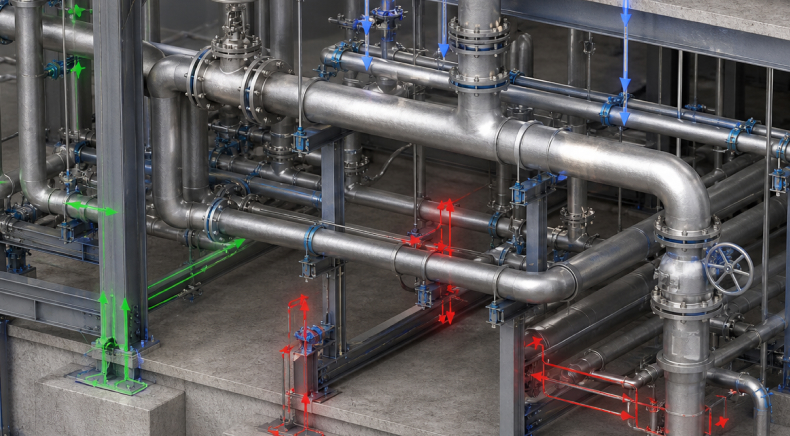
For brownfield facilities, piping retrofit engineering must account for available space, existing routes, operating conditions, support locations, equipment nozzle loads, accessibility, and shutdown requirements.

Equipment Retrofit

Equipment retrofits involve upgrading, replacing, or integrating process and mechanical equipment within an existing facility.

Examples include:

  • Pumps
  • Compressors
  • Heat exchangers
  • Pressure vessels
  • Reactors
  • Tanks
  • Filters
  • Process skids
  • Package equipment

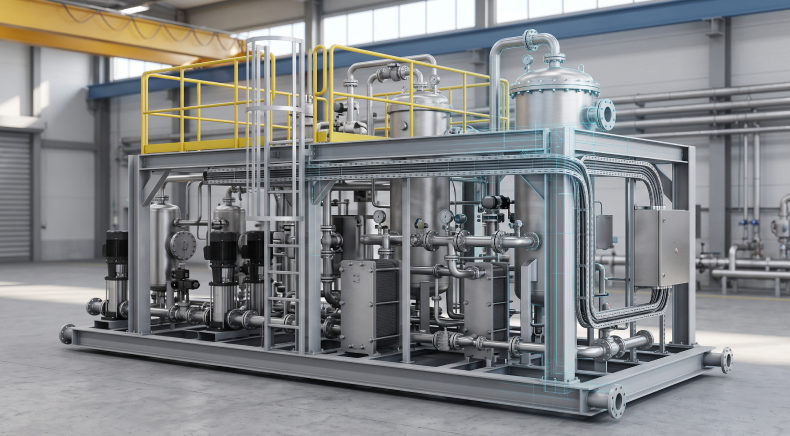
Equipment replacement often requires corresponding modifications to foundations, piping, electrical connections, instrumentation, platforms, and access arrangements.

Electrical Retrofit

Electrical retrofits upgrade electrical infrastructure to support new equipment, increased loads, improved reliability, or modern safety requirements.

The scope may include:

  • Electrical load assessment
  • Switchgear modifications
  • MCC upgrades
  • Transformer upgrades
  • Cable routing
  • Power distribution modifications
  • Grounding and earthing
  • Lighting upgrades
  • Electrical equipment replacement

Instrumentation Retrofit

Instrumentation retrofits replace outdated field instruments or introduce new measurement and monitoring capabilities.

Activities can include:

  • Instrument replacement
  • Instrument relocation
  • New instrument installation
  • Instrument datasheets
  • Control-loop modifications
  • Instrument cable routing
  • Field junction-box modifications
  • Integration with existing control systems

Control System Retrofit

Control-system retrofits modernize legacy automation infrastructure while maintaining compatibility with the existing plant.

Typical activities include:

  • PLC replacement
  • DCS migration
  • Control-panel upgrades
  • I/O migration
  • Control logic modifications
  • HMI upgrades
  • Alarm-management improvements
  • Safety-system integration

Structural Retrofit

Structural retrofits modify existing structures to accommodate new loads, equipment, operating requirements, or changes in plant configuration.

Typical activities include:

  • Strengthening existing steel structures
  • Modifying platforms and access structures
  • Reinforcing pipe racks
  • Strengthening equipment foundations
  • Adding structural members
  • Modifying support for new equipment
  • Evaluating existing structures for additional loads

Structural assessment is particularly important when new equipment is heavier than the original equipment or when existing structures must support additional piping and process systems.

Process Plant Retrofit vs Manufacturing Plant Retrofit

A process plant retrofit typically focuses on continuous or batch process systems involving equipment, piping, utilities, instrumentation, and process-control infrastructure. Oil & gas, petrochemical, chemical, power, and water-treatment facilities are common examples.

A manufacturing plant retrofit may focus more heavily on production equipment, material handling, utilities, electrical systems, automation, building infrastructure, and production-line integration. Both require careful assessment of existing conditions and coordination between new and legacy systems.

What are the Benefits of Industrial Plant Retrofitting?

A well-planned retrofit can provide operational and commercial benefits without requiring complete replacement of an existing facility.

  • Lower Capital Investment: Retrofitting can reduce the need to replace usable infrastructure and construct entirely new facilities. Existing foundations, buildings, pipe racks, utilities, equipment, and other assets may be retained where technically suitable. The resulting capital requirement depends on the retrofit scope, existing asset condition, shutdown requirements, and extent of new equipment and infrastructure.
  • Extended Asset Life: Upgrading critical equipment and supporting infrastructure can extend the useful operating life of an existing facility. This can be particularly valuable where the plant structure and major infrastructure remain serviceable but selected systems have reached the end of their useful life.
  • Improved Production Capacity: Retrofits can address bottlenecks by modifying equipment, piping, utilities, controls, and process systems. Capacity improvements may involve:
    • Equipment upgrades
    • Additional equipment
    • Piping modifications
    • Debottlenecking
    • Utility expansion
    • Process-control improvements
  • Improved Reliability and Availability: Replacing obsolete or failure-prone equipment can reduce recurring maintenance problems and improve plant availability.Ā Modern controls, improved equipment, upgraded electrical systems, and better monitoring can also support more predictable plant operation.
  • Improved Energy Efficiency: Retrofitting provides an opportunity to replace inefficient equipment and optimize energy-intensive systems. Potential areas include:
    • Pumps
    • Motors
    • Compressors
    • Heat exchangers
    • Steam systems
    • Electrical distribution
    • Process heating and cooling
    • Control systems
  • Improved Safety: Plant retrofits can incorporate improved safety systems, equipment protection, access arrangements, emergency systems, instrumentation, and process-control capabilities.
  • Regulatory and Compliance Readiness: Existing facilities may need modifications to meet updated safety, environmental, electrical, process, or industry-specific requirements. Retrofit engineering can identify required changes and incorporate them into the design.
  • Integration of Modern Technology: A retrofit can introduce modern automation, monitoring, digital plant models, improved instrumentation, and advanced equipment without requiring complete facility replacement.
  • Reduced Construction Scope: Where existing infrastructure can be retained, the amount of demolition and new construction may be reduced. This can simplify project execution, although brownfield installation still requires detailed planning around existing operations.
  • Greater Flexibility for Future Expansion: A retrofit can also be designed with future capacity increases, additional equipment, or technology upgrades in mind.

When Should You Consider a Plant Retrofit?

A plant retrofit should be considered when the existing facility remains fundamentally viable but selected systems or infrastructure no longer meet current operational requirements.

Common indicators include:

  • Frequent unplanned downtime: Repeated equipment failures or system interruptions may indicate that critical assets require replacement or upgrading.
  • Obsolete PLCs or controls: Legacy automation systems can create reliability, cybersecurity, maintenance, and spare-parts challenges.
  • A failed compliance audit: Identified regulatory or safety gaps may require targeted modifications to equipment, controls, electrical systems, or plant infrastructure.
  • Capacity constraints: Existing equipment or process systems may no longer support required production volumes.
    • Increasing maintenance costs
    • Difficulty obtaining spare parts
    • Aging equipment
    • Poor energy efficiency
    • New product requirements
    • Changes in process conditions
    • New environmental requirements
    • Need to integrate additional equipment or process units

Retrofit vs Replacement

The choice between retrofit vs replacement should be based on engineering feasibility, lifecycle economics, asset condition, operational risk, and project objectives.

A retrofit may be appropriate when the existing plant has usable infrastructure and only selected systems require modification. Full replacement may be more appropriate when the existing facility has extensive structural deterioration, severe obsolescence, inadequate capacity, major compliance issues, or fundamental process limitations.

A feasibility assessment can compare both options before a major capital decision is made.

Common Challenges in Industrial Plant Retrofitting

Industrial plant retrofitting also has a few issues beyond basic construction. Some of the scenarios include;

  • Incomplete or Inaccurate Existing-Condition Data: Original drawings may not reflect years of modifications, field changes, equipment replacements, or piping rerouting. Accurate surveys, site verification, laser scanning, and as-built modeling can help establish a reliable engineering basis.
  • Integration With Existing Systems: New equipment and systems must connect with legacy equipment, piping, electrical infrastructure, controls, foundations, and utilities. Interface engineering is therefore a major part of retrofit projects.
  • Limited Space: Brownfield facilities often have very limited space for new equipment, piping, cable trays, platforms, and maintenance access. Layout optimization and 3D coordination are essential.
  • Plant Shutdown Constraints: Retrofit work may need to be executed during short shutdown windows. Engineering must therefore identify tie-ins, installation sequences, temporary arrangements, and pre-fabrication opportunities early.
  • Existing Structural Adequacy: New equipment and piping can introduce additional loads to existing structures and foundations. Structural assessments may be required before modifications are finalized.
  • Piping Flexibility and Equipment Interface Loads: New piping configurations can introduce additional thermal, sustained, occasional, or seismic loads. Pipe stress analysis may therefore be required to validate flexibility and equipment nozzle loads.
  • Safety During Live-Plant Modifications: Work within or near operating facilities introduces additional risks. Engineering and execution planning must account for isolation, access, hazardous areas, temporary conditions, and simultaneous operations.
  • Multidisciplinary Coordination: A single equipment modification can affect process, piping, mechanical, structural, civil, electrical, instrumentation, and safety systems. Poor coordination can lead to clashes, rework, and installation delays.
  • Procurement and Long-Lead Equipment: Replacement equipment or control systems may have long procurement timelines. Retrofit engineering must therefore consider vendor information, equipment interfaces, and procurement schedules early.
  • Constructability and Installation Constraints: The new design must be physically installable within the existing facility. Lifting routes, access, temporary support, removal paths, transportation, and construction sequencing should be considered during engineering.

The Industrial Plant Retrofitting Process: Step by Step

Industrial Plant Retrofitting Steps

A successful retrofitting project relies heavily on effective planning. Ā Here’s how Rishabh Pro EngineeringĀ  team approaches this important stage:

Step 1: Define the Retrofit Objective

The process begins by establishing why the retrofit is required. The objective may be capacity expansion, equipment replacement, energy improvement, compliance, reliability improvement, automation modernization, asset-life extension, or integration of a new process.

Step 2: Assess Existing Plant Conditions

Existing drawings, P&IDs, equipment information, structural drawings, electrical documentation, instrument data, and available operating information are reviewed. Where documentation is incomplete, site surveys and 3D laser scanning can be used to capture actual plant conditions.

Step 3: Develop an As-Built Engineering Basis

The verified site information is converted into reliable engineering inputs.

This may include:

  • Updated P&IDs
  • As-built drawings
  • 3D plant models
  • Equipment layouts
  • Piping models
  • Structural models
  • Existing-condition reports

This stage is particularly important for brownfield projects because engineering decisions must reflect actual site conditions rather than outdated documentation.

Step 4: Perform Feasibility and Engineering Assessment

Potential retrofit options are evaluated against technical, operational, safety, cost, schedule, and constructability requirements.

Engineering teams may assess:

  • Existing equipment adequacy
  • Structural capacity
  • Piping flexibility
  • Equipment nozzle loads
  • Electrical loads
  • Utility capacity
  • Instrumentation compatibility
  • Available space
  • Process capacity
  • Safety requirements

Step 5: Develop the Retrofit Design

The selected option is developed through the required engineering disciplines. Depending on the project, this may include process, piping, mechanical, equipment, civil, structural, electrical, instrumentation and control, and safety engineering.

Step 6: Coordinate the Existing and New Systems

3D modeling and multidisciplinary reviews can be used to identify clashes between new and existing systems.

The design should verify:

  • Equipment clearances
  • Maintenance access
  • Piping routes
  • Cable routes
  • Structural interfaces
  • Instrument accessibility
  • Construction access
  • Tie-in locations

Step 7: Validate the Engineering

Specialized analyses are performed where required.

These may include:

Applicable project codes and industry standards are incorporated into the engineering assessment.

Step 8: Plan Tie-Ins, Installation and Site Logistics

Retrofit projects require detailed planning for connecting new systems to existing infrastructure and executing the modifications safely and efficiently. The engineering package should identify tie-in points, shutdown requirements, temporary arrangements, installation sequences, lifting requirements, and construction constraints.

Site logistics should also be considered during engineering to support smooth installation and minimize disruption to plant operations. Key considerations include:

  • Space Optimization: Assess available space for equipment installation, material handling, temporary arrangements, and movement of personnel and equipment. Layouts should provide adequate access for installation, operation, maintenance, and future interventions.
  • Traffic Management: Consider the movement of personnel, vehicles, lifting equipment, and construction materials within the site. Where required, installation planning should account for safe and efficient access routes around existing operating areas.
  • Waste Management: Plan for the handling and removal of debris, dismantled equipment, piping, structural components, and other waste generated during demolition and installation activities.
  • Installation Sequencing: Establish practical installation sequences based on shutdown windows, equipment access, lifting requirements, tie-ins, temporary supports, and interactions with existing plant systems.
  • Lifting and Material Handling: Evaluate equipment removal and installation routes, lifting requirements, crane access, and available space to ensure that major components can be safely transported and positioned.

Effective tie-in and site logistics planning helps reduce installation conflicts, avoid unnecessary delays, and improve the constructability of retrofit modifications.

Step 9: Prepare Construction-Ready Deliverables

The final engineering package may include:

  • General arrangement drawings
  • Piping layouts
  • Isometrics
  • Equipment drawings
  • Structural drawings
  • Electrical drawings
  • Instrumentation documents
  • Material take-offs
  • Design calculations
  • Engineering reports
  • Construction and installation documentation

Step 10: Integrate Safety and Regulatory Requirements

Safety considerations should be incorporated throughout the retrofit lifecycle, particularly where modifications involve existing equipment, demolition, new installations, tie-ins, shutdowns, or work around operating systems. Our team takes a proactive approach to enhance safety in plant engineering operations.

Key considerations include:

  • Identify and mitigate retrofit hazards: Assess potential risks associated with existing equipment, demolition, installation, lifting, tie-ins, access, and temporary conditions, and incorporate appropriate mitigation measures into the engineering and execution plan.
  • Support compliance with applicable requirements: Design modifications in accordance with applicable project specifications, industry requirements, and local safety and regulatory standards.
  • Consider safe installation and operation: Evaluate equipment access, maintenance clearances, emergency access, isolation requirements, lifting arrangements, and other factors that can affect safe installation and future plant operation.
  • Coordinate safety across disciplines: Ensure that process, piping, mechanical, structural, electrical, instrumentation, and other engineering modifications are reviewed for their impact on overall plant safety.
  • Support safety reviews and documentation: Where required, engineering inputs can support safety reviews, hazard identification, design verification, and documentation needed for implementation.

You would agree that safety is the most important aspect of engineering projects. Accidents can be avoided with effective process control and diligent operations. Explore Rishabh Pro Engineering’s essential safety considerations for design engineering that help prioritize safety from design to construction, protecting people, property, and communities.

Step 11: Support Implementation and Closeout

Engineering support may continue through construction, field queries, design clarifications, installation issues, and as-built updates. During implementation, the engineering team can help resolve site conditions that differ from the original design and provide technical clarification where required.

Following completion, the modified plant documentation should be updated to reflect the final installed condition. This may include revised drawings, models, equipment information, piping documentation, and other engineering records.

Maintaining accurate as-built documentation helps provide a reliable engineering basis for future maintenance, modifications, inspections, and additional plant retrofit or expansion projects.

How Rishabh Pro Engineering Supports Plant Retrofit Projects

Rishabh Pro Engineering provides multidisciplinary engineering services for industrial plant retrofit and brownfield modification projects, supporting EPCs, plant owners, operators, and engineering organizations.

Our retrofit engineering support can include:

This multidisciplinary capability helps coordinate modifications across interconnected plant systems.

  • Piping Retrofit and Stress Analysis: For piping modifications, engineering can include new routing, tie-in design, support modifications, flexibility assessment, and pipe stress analysis. Where required, piping loads can also be evaluated at connected equipment nozzles.
  • Equipment Replacement and Integration: Equipment often affects multiple systems. Rishabh Pro Engineering can support equipment layout, piping connections, structural interfaces, foundations, access, instrumentation, electrical connections, and multidisciplinary coordination.
  • Brownfield Expansion and Capacity Upgrades: Retrofit engineering can also support plant expansion and debottlenecking by integrating new equipment and systems into existing facilities while considering space, tie-ins, constructability, and operational constraints.

Real Life Case Study

Case Study: Multidiscipline Engineering for Reactor Area of an Acetylenics Complex Plant

A US-based EPC company specializing in petrochemical and industrial projects required multidisciplinary engineering support for the reactor area of an Acetylenics Complex (ACE) plant. The project involved replacing four existing direct steam injectors with shell-and-tube heat exchangers while integrating the new equipment with the existing plant infrastructure. The engineering scope required coordinated piping, pipe stress, civil and structural, electrical, and instrumentation design to ensure the modifications could be safely integrated into the existing facility.

Rishabh Pro Engineering provided comprehensive multidiscipline plant engineering for the petrochemical facility, covering piping engineering, pipe stress analysis, civil and structural engineering, electrical, and instrumentation. The team developed equipment GA drawings, equipment foundation drawings, special support drawings, piping isometrics, instrument datasheets, and a 3D plant model on PDS. Technical bid evaluations were also performed to support vendor equipment selection. Existing plant information, including laser-scan data, P&IDs, and equipment drawings, was used to develop the engineering for the modified reactor area.

The engineering team coordinated the new heat exchangers with the existing piping and plant infrastructure, including the routing of approximately 35 new lines and associated supports, foundations, electrical grounding, and instrumentation. Visual stress analysis was performed to assess the modified piping system, while ASME B31.3 requirements were followed for the piping engineering and analysis.

Engineering Insight: By integrating piping, pipe stress, equipment, structural, civil, electrical, and instrumentation engineering, Rishabh Pro Engineering supported the safe integration of new heat exchangers into an existing petrochemical reactor area while improving design coordination, constructability, and alignment with applicable piping requirements.

Final Words

Industrial plant retrofitting provides a practical pathway for extending the life and capability of existing industrial facilities without automatically committing to complete plant replacement. The success of a retrofit depends on understanding the existing facility accurately, defining the modification objectives, assessing existing systems, coordinating multidisciplinary interfaces, validating the proposed design, and planning installation around operational constraints.

From equipment and piping modifications to structural strengthening, automation upgrades, electrical improvements, and capacity expansion, retrofit engineering must connect the new design with the realities of the existing plant. For complex brownfield facilities, the engineering challenge is not simply designing what is new. It is designing what is new to work safely and effectively with what already exists.

Frequently Asked Questions On Plant Retrofitting

Q: What is the difference between a plant retrofit and a new plant?

A: A plant retrofit modifies an existing facility, whereas a new plant is developed as a greenfield facility. Retrofit projects can retain existing buildings, foundations, utilities, structures, equipment, and other infrastructure where technically suitable.

Q: How does 3D laser scanning help industrial plant retrofits?

A: 3D laser scanning captures actual site conditions and can be converted into an engineering-ready 3D model. This helps identify undocumented modifications, verify equipment and piping locations, improve clash detection, and reduce uncertainty during brownfield design.

Q: Who handles expansions and retrofits of existing industrial plants?

A: Industrial plant expansions and retrofits are typically handled by multidisciplinary engineering teams comprising process, piping, mechanical, equipment, civil, structural, electrical, instrumentation, control, and project engineering specialists. EPC contractors, engineering consultants, plant owners, and specialized engineering firms may manage different portions of the retrofit scope depending on project requirements.

Q: How long does an industrial plant retrofit take?

A: The duration depends on the size and complexity of the facility, retrofit scope, shutdown window, engineering requirements, procurement lead times, site constraints, and construction strategy. Smaller system upgrades may be completed within a limited shutdown, while major brownfield modifications can require months of engineering and execution.

Q: Can a plant retrofit be performed while the facility is operating?

A: Some retrofit activities can be performed while the plant is operating, while others require planned shutdowns or isolated systems. The approach depends on the equipment and process involved, safety requirements, tie-in strategy, and construction sequence.

Seek Help With Plant Retrofit?

Our experienced team can work with you in your plant retrofit journey to enhance performance and efficiency.

Our recent blogs