Modern industrial manufacturing depends heavily on well-executed chemical plant design. From specialty chemicals to petrochemical processing and energy transition technologies, the success of any production facility begins long before construction starts — it begins with engineering. Chemical plants operate in environments where precision, safety, and efficiency are non-negotiable. A poorly planned design can lead to operational bottlenecks, regulatory compliance issues, costly redesigns, and even safety hazards.
This is why designing chemical plants requires a structured, multidisciplinary approach that integrates process engineering, piping systems, mechanical equipment, structural infrastructure, electrical networks, and instrumentation controls.
In this article, we explore the fundamentals of chemical plant design, the engineering phases involved, key design considerations, and how multidisciplinary engineering teams help deliver efficient, compliant, and constructible industrial facilities.
Introduction to Chemical Plant Design
Designing of chemicals plants refers to the comprehensive engineering process used to plan, develop, and document facilities where chemical reactions and processes occur at industrial scale. Though the primary goal of chemical plant design is to convert raw materials into desired products efficiently while maintaining safety, regulatory compliance, and operational reliability. Designing chemical plants involves far more than selecting equipment or preparing piping drawings.
It requires engineers to evaluate:
- Process efficiency
- Material compatibility
- Equipment performance
- Safety and hazard mitigation
- Plant layout and maintenance accessibility
- Energy consumption and sustainability
- Regulatory compliance requirements
Each of these factors must be carefully coordinated to create a facility that operates reliably for decades. Further, an effective chemical plant design would ensure that the plant can be constructed smoothly, commissioned efficiently, and maintained safely throughout its lifecycle.
Key Phases of Chemical Plant Design
Designing chemical plants typically follows a structured engineering workflow. Each stage builds upon the previous one to refine the project from concept to execution-ready documentation.
Conceptual Design
The conceptual stage defines the feasibility and high-level structure of the facility.
Key activities include:
- Process concept development
- Initial process flow diagrams (PFDs)
- Technology selection
- Preliminary equipment identification
- Capacity evaluation
- Economic feasibility assessment
This phase establishes the basic framework for the plant and helps stakeholders determine whether the project is technically and economically viable.
Basic Engineering (FEED)
The next stage develops the conceptual idea into a structured engineering plan.
Deliverables often include:
- Detailed process flow diagrams
- Preliminary Piping & Instrumentation Diagrams (P&IDs)
- Equipment specifications
- Utility requirements
- Initial plant layout concepts
Basic engineering provides the foundation required for cost estimation, procurement planning, and regulatory evaluation.
Detailed Engineering
Detailed engineering converts the design concept into construction-ready documentation.
This phase produces:
- Complete P&IDs
- 3D plant models
- Detailed piping layouts and isometrics
- Structural and civil drawings
- Electrical and instrumentation diagrams
- Material take-offs (MTOs)
At this stage, chemical plant design becomes executable. Every component is defined clearly so construction teams can build the facility accurately and efficiently.
Core Engineering Disciplines Involved in Chemical Plant Design
Designing a chemical plant requires coordination across multiple engineering disciplines. Each plays a critical role in ensuring the facility functions safely and efficiently.
Process Engineering
As a process engineering company, we help organizations define and optimize their core process architecture.
It would include:
- Developing robust process flow schemes that translate production goals into practical engineering workflows.
- Conducting mass and energy balance calculations to ensure efficiency, safety, and accurate equipment selection.
- Sizing critical equipment based on process requirements, performance criteria, and future scalability.
Optimizing process operations to improve yield, minimize energy consumption, and enhance overall plant efficiency.
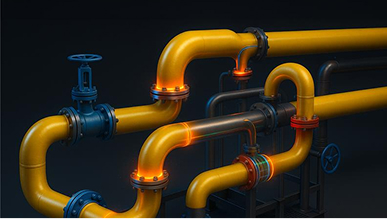
Piping Engineering
Our piping engineering services ensure seamless connectivity across all plant systems, enabling efficient material transfer and safe operations.
We provide:
- Pipe routing and layout development for streamlined flow paths and maintenance accessibility.
- Isometric and detailed piping drawings for accurate fabrication and installation.
- Pipe support design to ensure structural integrity and long-term reliability.
- Utility distribution network planning to integrate steam, water, air, and other services across the facility.
Through precise piping design, we help maintain uninterrupted flow, operational safety, and construction-ready documentation.
Mechanical Engineering
We support clients by specifying and integrating mechanical & equipment engineering services that are essential for plant performance.
Our role covers:
- Selecting and integrating reactors, heat exchangers, pumps, compressors, and storage vessels tailored to process needs.
- Ensuring mechanical systems meet performance, safety, and compatibility criteria across the plant.
Coordinating equipment design with other engineering disciplines for seamless installation and operation.
Civil & Structural Engineering
Our civil and structural engineering services establish the physical backbone of the plant.
This includes:
- Designing equipment foundations capable of supporting static and dynamic loads.
- Developing structural steel platforms and pipe racks for safe equipment access and piping support.
- Designing access structures that enhance maintenance efficiency and operational safety.
We ensure every structure is engineered for stability, durability, and compliance under real-world operating conditions.
Electrical & Instrumentation Engineering
We enable smart, safe, and automated plant operations through integrated electrical and instrumentation engineering solutions.
Our expertise includes:
- Designing electrical power distribution systems to ensure reliable energy delivery across the plant.
- Developing instrumentation and control networks for accurate measurement and monitoring of critical parameters.
- Integrating control systems such as PLC, SCADA, and DCS into a unified automation strategy.
- Implementing automation frameworks to improve process control, safety, and operational consistency.
These systems empower operators with real-time insights and ensure safe, optimized plant functionality.
Key Considerations in Designing Chemical Plants
Chemical plant design requires careful attention to several technical and operational considerations.
- Process Efficiency: The plant must maximize product yield while minimizing energy consumption and raw material waste.
- Equipment Accessibility: Maintenance access is critical. Equipment must be positioned to allow inspection, service, and replacement without major disruptions.
- Plant Layout Optimization: Efficient layout design improves workflow, reduces piping complexity, and ensures safe movement of personnel.
- Material Compatibility: Chemical reactions often involve corrosive or hazardous materials. Selecting the right materials for piping, vessels, and valves is essential for long-term reliability.
- Utility Integration: Chemical plants rely on utilities such as steam, cooling water, compressed air, and power. These systems must be integrated seamlessly into the plant design.
Software Tools Used in Designing Chemical Plants
Modern chemical plant design relies heavily on advanced digital engineering tools. These technologies improve design accuracy, enable collaboration, and help identify potential conflicts early in the engineering process.
Common tools used in designing chemical plants include:
- AVEVA E3D for intelligent 3D plant modeling
- Hexagon CADWorx for piping design and layout
- Autodesk Inventor for mechanical equipment design
- Autodesk Revit for structural modeling
- Aspen HYSYS for process simulation and analysis
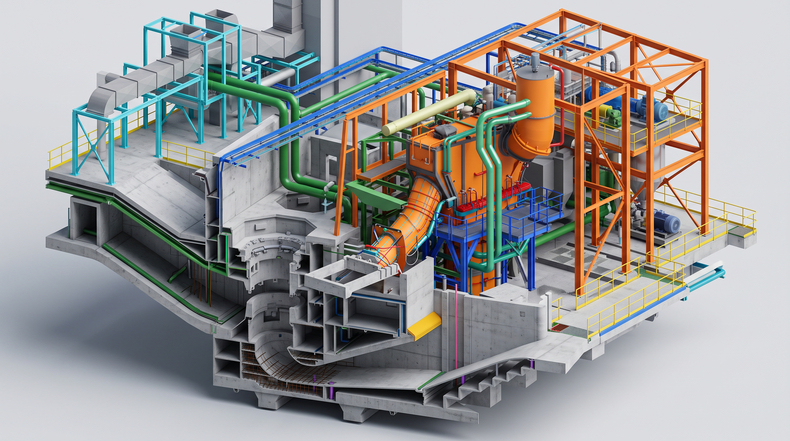
3D modeling platforms allow engineering teams to visualize the entire facility before construction begins. This helps detect clashes between systems, optimize equipment placement, and validate constructability.
Safety and Compliance in Chemical Plant Design
Safety is a fundamental requirement in designing chemical plants. Industrial chemical facilities must comply with strict regulatory frameworks and international engineering standards such as:
- ASME
- API
- ISO
- IEC
- NFPA
Designing chemical plants also requires integration of safety methodologies such as:
- Hazard and Operability (HAZOP) studies
- Process Safety Management (PSM) principles
- Fire and explosion protection planning
- Emergency shutdown systems
By embedding safety measures into the design phase, engineers reduce operational risk and protect both personnel and infrastructure.
Challenges in Designing Chemical Plants and How We Overcome Them
Chemical plant design projects often present complex technical challenges.
- Multidisciplinary Coordination:One of the biggest challenges when designing chemical plants is ensuring coordination between engineering disciplines. Without proper coordination, design conflicts can lead to construction delays and costly rework.
- Our solution: Integrated multidisciplinary engineering teams working within shared 3D modeling environments.
- Constructability Issues:Designs that look good on paper may be difficult to construct in real-world conditions.
- Our solution: Constructability reviews during the engineering phase ensure that designs can be built efficiently.
- Regulatory Compliance:Industrial facilities must meet strict regulatory requirements.
- Our solution: Engineering workflows aligned with global standards and best practices.
Industries That Require Chemical Plant Design
Chemical plant design supports a wide range of industrial sectors.
These include:
- Specialty chemical manufacturing
- Petrochemical processing
- Industrial chemical production
- Agrochemical manufacturing
- Pharmaceutical intermediates
- Energy transition and carbon capture facilities
Each industry has unique process requirements, making multidisciplinary expertise essential when designing chemical plants
Why Choose Rishabh Pro Engineering For Chemical Plant Design?
Rishabh Pro Engineering supports designing of chemical plants by providing multidisciplinary engineering services that support the design & development of complex chemical processing facilities.
Our team delivers detailed engineering services including:
Process Documentation Development
At Rishabh Pro Engineering, we prepare comprehensive process documentation that forms the backbone of chemical plant design. This includes developing detailed PFDs, P&IDs, equipment specifications, and utility requirements—ensuring that every process parameter is clearly defined for seamless downstream engineering and construction. Our documentation supports compliance, accuracy, and coordination across all technical disciplines.
3D Plant Modeling
We use advanced 3D modeling platforms to build intelligent digital representations of the entire facility. These models help visualize equipment placement, piping routes, and structural interfaces while identifying clashes early in the design cycle. By integrating all disciplines into a unified 3D environment, our team ensures constructability, accuracy, and smoother project execution
Piping and Equipment Layout Engineering
Our piping team develops detailed piping layouts and equipment arrangements that promote efficient flow, safe maintenance access, and long-term reliability. From routing critical process lines to designing support systems and utility networks, we ensure that piping design aligns with process needs and practical construction constraints. Our interdisciplinary coordination reduces redesigns and optimizes plant performance.
Structural and Foundation Design Support
Rishabh Pro Engineering provides structural and civil support to ensure the plant’s physical integrity. Our engineers design foundations for dynamic and static equipment, structural steel platforms, pipe racks, and operational access structures. These designs are developed to meet load requirements, industry codes, and site-specific conditions—ensuring a safe and durable facility.
Electrical and Instrumentation Integration
We integrate electrical distribution systems, instrumentation networks, and smart control solutions such as PLC, SCADA, and DCS. Our EI engineering ensures accurate monitoring, reliable power availability, and seamless automation across the plant. This integration enhances safety, improves operational consistency, and provides operators real‑time visibility into plant performance.
Material Take‑Off Documentation
Our team prepares discipline-wise material take-off (MTO) documents that provide accurate quantification of all equipment, piping components, structural materials, and electrical/instrumentation elements. These MTOs support procurement planning, cost estimation, and construction scheduling—helping clients manage resources efficiently while minimizing project risks.
Real Life Use Case
Detailed Engineering & Design for a Chemical Plant
Project: Comprehensive Detailed Engineering & Design for a Chemical Manufacturing Facility
Client: Asia‑based Leading Chemical Manufacturer
Objective: Rishabh Pro Engineering was appointed to deliver complete detailed engineering and design for a new chemical plant, ensuring full compliance with international codes, client specifications, and industry best practices. The goal was to create a constructible, safe, and efficient plant design through multidisciplinary engineering workflows.
Scope of Work
Our engineering team executed an end‑to‑end detailed engineering package, which included:
- Finalization of P&IDs and PMS based on client‑provided basic P&IDs.
- Preparation of line lists and development of equipment and piping models aligned with process requirements.
- Routing of 50# and 120# steam lines, leveraging client’s analysis reports and native design files.
- Slab design calculations and creation of floor‑wise slab drawings.
- Structural modeling of steel members, platforms, and support systems using client‑provided inputs.
- Modeling of ducts, chutes, and major package equipment, ensuring accurate space allocation.
- Development of piping supports based on client‑approved standards for both metallic and non‑metallic pipes.
- Instrumentation and electrical cable tray routing for all trays above 100 mm, aligned with project inputs.
- Firefighting system modeling following client guidelines and plant safety philosophy.
- Preparation of 5‑stage piping MTOs, ensuring accurate quantity estimation across development stages.
- Equipment, nozzle orientation and elevation sketches prepared using vendor documentation.
- Mechanical and special pipe support (MPS/SPS) designs, with engineering sketches submitted for civil execution.
- Generation of multi-view 3D isometrics for erection and fabrication, including IFA and IFC submission.
- Preparation of piping GA drawings and As‑Built P&ID documentation.
Outcome
The fully coordinated, multidisciplinary engineering package enabled the client to:
- Streamline construction planning through accurate and clash‑free 3D models.
- Improve installation efficiency with precise isometrics, layouts, and MTOs.
- Ensure regulatory compliance and safety adherence across all plant systems.
- Reduce rework and field modifications due to well‑integrated, execution‑ready engineering deliverables.
This project demonstrated Rishabh Pro Engineering’s capability to deliver comprehensive, standards‑compliant, and construction‑ready detailed engineering support for complex chemical manufacturing facilities.
Final Words
Chemical plant design is a complex engineering discipline that requires coordination across multiple technical domains. From process planning and equipment selection to piping systems and structural support, every design decision affects plant performance and safety. By applying structured engineering workflows, advanced design tools, and multidisciplinary expertise, organizations can develop facilities that operate efficiently and remain compliant with industry standards. Partnering with an experienced engineering firm ensures that designing chemical plants becomes a well-coordinated, execution-ready process that supports long-term industrial success.
Frequently Asked Questions About Chemical Plant Design
Q: How long does a typical chemical plant design project take?
A: A chemical plant design timeline varies based on project size, process complexity, regulatory requirements, and the number of engineering disciplines involved. While smaller plants may take a few months, large-scale or highly integrated facilities can require a year or more for full conceptual, basic, and detailed engineering phases.
Q: What factors influence the cost of designing chemical plants?
A: Key cost drivers include the complexity of process systems, specialized equipment, material selection due to corrosion or chemical exposure, integration of automation systems, 3D modeling requirements, regulatory compliance needs, and the extent of multidisciplinary coordination.
Q: How does early 3D modeling impact project success?
A: Early adoption of 3D modeling helps detect clashes, improve spatial planning, optimize equipment arrangement, and reduce rework during construction. It also allows teams to simulate operations, maintenance access, and safety clearances before fabrication begins.
Q: What role does sustainability play in modern chemical plant design?
A: Sustainability considerations include energy‑efficient equipment, heat recovery systems, waste minimization strategies, low‑emission technologies, and designs that support future scalability toward greener operations. These elements help reduce long-term operating costs and environmental impact.
Q: What documents are essential for smooth construction handover?
A: Critical documents include detailed P&IDs, 3D models extracts, isometric drawings, piping GA drawings, structural plans, load calculations, cable routing diagrams, material take-offs, and vendor data sheets. These form the backbone of procurement, fabrication, and construction.
Q: Can chemical plant designs be optimized for future expansion?
A: Yes. Future scalability is integrated through modular layouts, spare equipment provisions, allowance for additional utility loads, flexible piping routes, and expandable control systems. This ensures the plant can adapt to increased production without major redesigns.
Q: How does digital integration improve overall design efficiency?
A: Using interoperable tools—such as intelligent 3D modeling software, process simulation platforms, and integrated project databases—helps different engineering disciplines collaborate seamlessly, reduces data loss, and accelerates design iterations.
Q: How do engineering teams manage multidisciplinary coordination?
A: Regular cross-functional design reviews, shared 3D models, unified data environments, and coordinated engineering workflows help synchronize process, mechanical, piping, civil, structural, and electrical/instrumentation outputs to avoid inconsistencies and delays.