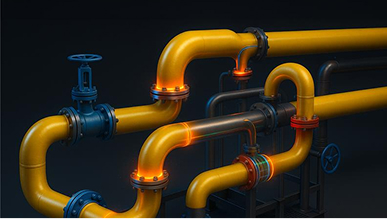
The shutdown window is limited. The plant is already operational. Existing drawings may not fully reflect years of field modifications. New equipment must be integrated into a congested layout without disrupting production, compromising safety, or extending commissioning timelines. This is the real complexity of brownfield plant expansion engineering.
Unlike greenfield projects where engineering teams work with open layouts and new design conditions, brownfield expansion projects require new systems to be planned, designed, and integrated within existing industrial facilities. Every engineering decision must consider live operations, aging infrastructure, space constraints, shutdown dependencies, safety requirements, and existing utility limitations.
For industries looking to increase production capacity, improve efficiency, modernize aging assets, or meet new regulatory requirements, brownfield expansion offers a practical and cost-effective path. However, successful execution depends much more than adding new equipment or modifying layouts. It requires accurate existing-condition assessment, multidisciplinary coordination, phased implementation planning, digital engineering workflows, and strong Management of Change discipline. Brownfield plant expansion engineering is therefore not just a design activity. It is an execution-focused approach that helps industrial facilities grow without losing operational control.
In this blog, we will explore the key aspects of brownfield plant expansion engineering, including what it involves, the major drivers behind such projects, the core engineering disciplines required, common challenges, and the role of retrofit engineering in successful plant expansion. We will also discuss how digital technologies are transforming brownfield engineering, best practices for execution, industries that benefit from these projects, and how Rishabh Pro Engineering supports clients with reliable brownfield expansion solutions.
What is Brownfield Plant Expansion Engineering?
Brownfield plant expansion engineering refers to the planning, design, modification, and integration of new systems within an existing operational facility. These projects may involve increasing plant capacity, upgrading process units, adding new equipment, modifying piping networks, strengthening structures, expanding utilities, or integrating automation and control systems.
The defining feature of brownfield expansion is that the work takes place around existing assets. The plant may continue operating during engineering, procurement, construction, and commissioning activities. This makes brownfield projects significantly more complex than greenfield developments.
Typical brownfield expansion engineering activities include:
- Existing plant assessment and site verification
- Point cloud scanning and as-built validation
- Process modification and debottlenecking studies
- Piping routing and tie-in engineering
- Structural adequacy checks and retrofit design
- Electrical load assessment and system upgrades
- Instrumentation and control system integration
- Utility capacity evaluation
- Shutdown and commissioning planning
- Management of Change documentation
Before discussing engineering strategies, it is important to understand why brownfield projects are fundamentally different from greenfield developments.
| Factor | Greenfield Project | Brownfield Expansion Project |
| Site Conditions | Open design environment | Existing operational constraints |
| Engineering Data | New design basis | Often incomplete or outdated documentation |
| Construction Access | Flexible | Restricted by live operations |
| Shutdown Dependency | Minimal | Critical to execution success |
| Safety Complexity | Lower | High due to simultaneous operations |
| Design Freedom | High | Limited by existing infrastructure |
| Risk Profile | More predictable | High integration and constructability risk |
So, in simpler terms, in greenfield projects, engineering defines the plant, while in brownfield projects, the existing plant defines the engineering. This distinction changes everything — from design workflows and procurement planning to shutdown strategy, commissioning sequencing, and construction execution. To understand this difference in greater detail, including how each project type impacts engineering scope, planning approach, and execution strategy, read our detailed guide on greenfield vs. brownfield detailed engineering.
Key Drivers Behind Brownfield Plant Expansion Projects
Industrial organizations pursue brownfield plant expansion when they need to increase capacity, improve performance, or modernize existing assets without developing an entirely new facility. These projects allow companies to make better use of current infrastructure while addressing operational, regulatory, safety, and sustainability requirements. For many plant owners, brownfield expansion becomes a practical way to support business growth while controlling capital investment and minimizing disruption.
- Increasing production capacity: Growing market demand often requires plants to improve throughput. Brownfield expansion helps organizations add capacity by upgrading or modifying existing systems instead of building a new facility from the ground up.
- Improving process efficiency: Existing process units may face bottlenecks, energy losses, or outdated operating practices. Brownfield projects help optimize workflows, improve equipment performance, and enhance overall plant productivity.
- Modernizing aging infrastructure: Many industrial facilities operate with aging equipment, legacy layouts, and outdated control systems. Expansion projects create an opportunity to replace obsolete assets, improve reliability, and extend plant lifecycle performance.
- Meeting regulatory and environmental requirements: Facilities may need to upgrade emissions control systems, wastewater handling, fire protection, or safety systems to comply with updated standards. Brownfield expansion allows these improvements to be integrated into existing operations.
- Enhancing safety and reliability: Brownfield projects can address safety gaps, improve access and maintainability, upgrade protection systems, and reduce the risk of unplanned downtime caused by aging or overloaded infrastructure.
- Supporting sustainability goals: Industrial organizations increasingly use brownfield expansion to improve energy efficiency, reduce emissions, optimize resource consumption, and align existing facilities with sustainability targets.
- Reducing capital expenditure compared to greenfield projects: By leveraging existing land, utilities, structures, and equipment, brownfield expansion can offer a more cost-effective alternative to building a completely new facility.
- Extending asset lifecycle performance: Strategic modifications, retrofits, and upgrades help plant owners increase the useful life of existing assets while improving long-term operational value.
Core Engineering Disciplines Involved in Brownfield Expansion Engineering
Brownfield expansion projects require close coordination across multiple engineering disciplines. Since new systems must be integrated into existing facilities, no discipline can work in isolation.
- Process Engineering for Operating Basis Development: Process engineering defines the operating basis for expansion. This includes process calculations, equipment sizing, hydraulic analysis, heat and material balance updates, debottlenecking studies, and process safety considerations.
- Piping Engineering for Layout, Routing, and Tie-Ins: Piping engineering plays a central role in routing new lines, identifying tie-in points, validating pipe stress, preparing isometrics, and ensuring that new piping systems can be installed within congested plant layouts.
- Mechanical Engineering for Equipment Integration: Mechanical engineering supports equipment selection, equipment layout, package integration, rotating equipment assessment, and mechanical modifications required for expansion.
- Structural and Civil Engineering for Load and Support Assessment: Structural and civil engineering teams evaluate existing foundations, pipe racks, platforms, supports, and steel structures to determine whether they can accommodate new loads. Where required, they design reinforcements, access platforms, foundations, and structural modifications.
- Electrical Engineering for Power and Distribution Upgrades: Electrical engineering teams assess power availability, electrical load increases, motor control centers, cable routing, earthing, lighting, and power distribution upgrades.
- Instrumentation and Control Engineering for System Integration: Instrumentation and control engineering ensure that new equipment and systems are properly integrated with existing control architecture, field instruments, safety systems, and automation platforms.
In brownfield projects, these disciplines must work together continuously because one design change can trigger multiple downstream impacts. For example, adding a new heat exchanger may require piping rerouting, structural reinforcement, electrical cable tray relocation, instrumentation updates, and revised shutdown planning. This is why multidisciplinary coordination is one of the most important success factors in brownfield plant expansion engineering.
Major Challenges in Brownfield Expansion Engineering
Brownfield expansion projects are complex because engineering teams must work within existing plant conditions that are often uncertain, undocumented, congested, or difficult to modify. Unlike greenfield projects, where systems are designed from the ground up, brownfield engineering requires new modifications to be integrated into live facilities without disrupting operations, compromising safety, or increasing shutdown duration. This makes early planning, accurate site validation, and constructability review essential.
- Inaccurate or outdated documentation: Many older plants have undergone multiple modifications over the years that may not be reflected in original drawings or as-built documents. Relying on outdated documentation can lead to design clashes, fabrication errors, installation issues, and costly field rework.
- Space, Layout, and Construction Access Constraints: Existing facilities often have congested piping corridors, limited equipment access, restricted maintenance clearances, complex cable routing, and restricted access for cranes, material handling, and installation activities. New systems must be carefully designed around these constraints while maintaining safety, operability, maintainability, and constructability. Early constructability reviews help identify access limitations before execution begins.
- Critical tie-in planning: Tie-ins are among the highest-risk activities in brownfield projects because they involve connecting new systems to existing live facilities. Poorly planned tie-ins can extend shutdown windows, delay commissioning, and directly impact production continuity.
- Utility capacity and live interface constraints: Existing steam, cooling water, compressed air, instrument air, flare, and electrical systems may already be operating near capacity, while new systems often need to connect with these live utility networks. Without proper utility validation and interface planning, expansion activities can create operational instability, interrupt critical plant services, or affect startup and commissioning performance.
- Safety and shutdown risks in live plant environments: Brownfield expansion often involves construction activity inside operating facilities, where work must be completed within short, planned shutdown windows. This requires structured SIMOPS planning, Permit-to-Work systems, isolation management, hot work control, field verification, and close coordination between engineering, operations, and construction teams to avoid extended downtime and production impact.
- Structural load limitations: Existing foundations, pipe racks, platforms, and support structures may not be designed for additional equipment, piping, or cable loads. Structural adequacy checks are essential before finalizing expansion layouts.
- Regulatory, Permit, and Environmental Compliance Dependencies: Brownfield modifications may trigger new requirements related to safety approvals, environmental permits, hazardous area classification, fire protection, pressure system compliance, emissions, wastewater discharge, noise levels, or waste handling systems. These dependencies must be evaluated early to ensure new modifications align with applicable standards, operating permits, and approval timelines while avoiding late-stage project delays.
- Hazardous area classification changes: Process modifications, new equipment, or changes in operating conditions may affect hazardous area zoning. This can influence electrical design, instrumentation selection, equipment placement, and safety systems.
- Commissioning complexity: Brownfield commissioning must be carefully coordinated with existing operations. New systems may need to be tested, validated, and brought online in phases without affecting plant stability or safety.
Role of Brownfield Retrofit Engineering in Plant Expansion
Brownfield retrofit engineering plays a critical role in plant expansion because it focuses on modifying existing assets to support new operational requirements. Retrofit engineering may involve strengthening structures, modifying piping systems, replacing outdated equipment, upgrading electrical infrastructure, adding instrumentation, or integrating new control systems. Unlike new installations, retrofit work must account for existing equipment conditions, layout limitations, operational history, and maintenance requirements. For example, plant expansion may require a new pump package to be installed within an existing process area. Retrofit engineering would evaluate foundation adequacy, suction and discharge piping modifications, pipe stress impact, electrical load requirements, instrumentation integration, access clearances, and shutdown sequencing.
The value of retrofit engineering lies in its ability to extend the existing assets without unnecessary replacement. This helps reduce capital costs, minimize downtime, and improve project feasibility. In brownfield expansion, retrofit engineering also supports debottlenecking. Instead of building entirely new systems, engineering teams can identify targeted modifications that improve throughput, reliability, or energy efficiency. A well-planned retrofit strategy allows plant owners to achieve expansion objectives while maintaining control over cost, schedule, safety, and operational continuity.
Rishabh Pro Engineering Approach to Brownfield Plant Expansion Engineering
We approach brownfield plant expansion projects as an execution-sensitive engineering program, not just a standalone design assignment. The focus is on understanding existing plant realities, reducing uncertainty early, improving constructability, and supporting safe implementation within live operating environments.
Project Objective and Existing-Condition Assessment
- Understanding the expansion objective: The engagement begins with a clear understanding of the client’s capacity goals, operational priorities, project drivers, existing facility constraints, and shutdown limitations.
- Existing-condition assessment: We support clients through field verification, point cloud data review, as-built validation, and constructability assessments to establish an accurate understanding of current plant conditions.
Multidisciplinary Engineering Design
- Multidisciplinary engineering coordination: Teams across process, piping, equipment, structural, electrical, and instrumentation engineering work together to develop an integrated solution that aligns with existing infrastructure and future expansion needs.
- Early risk and conflict identification: The approach focuses on identifying design clashes, layout conflicts, access limitations, utility constraints, and constructability issues before they impact construction or shutdown activities.
- Tie-in and shutdown-sensitive planning: Our team helps with the identification of tie-in locations, field validation of connection points, phased execution planning, and alignment of engineering deliverables with shutdown requirements.
- Live plant implementation support: Engineering solutions are developed with consideration for operational continuity, safety requirements, SIMOPS conditions, Permit-to-Work dependencies, and construction access limitations.
- Management of Change (MoC) integration: MOC considerations are built into the engineering workflow to evaluate the impact of modifications on process conditions, safety systems, operating procedures, maintenance access, and commissioning readiness.
- Integrated 3D coordination: 3D modeling and coordination workflows help validate layouts, detect clashes, improve visualization, and support constructability reviews across disciplines.
- Constructability-focused engineering: The team evaluates how new systems will actually be installed, accessed, maintained, commissioned, and operated within existing plant constraints.
Execution Readiness & Handover
- Improved execution readiness: By combining field validation, multidisciplinary coordination, digital modeling, and shutdown-aware planning, Rishabh Pro Engineering helps clients reduce field rework risks and maintain better control over execution-sensitive activities.
- From uncertainty to execution confidence: This structured approach enables clients to move from unclear existing conditions and complex brownfield constraints toward safer, more predictable, and better-coordinated project execution.
Digital Technologies Transforming Brownfield Plant Engineering
Digital technologies are changing how brownfield expansion projects are planned and executed.
The most important shift is the use of laser scanning and point cloud modeling. Instead of relying only on old drawings, engineering teams can capture accurate existing plant conditions and convert them into intelligent 3D models. This improves dimensional accuracy and helps identify conflicts early.
A typical digital brownfield workflow follows this sequence:
Scan → Model → Validate → Simulate → Execute
- Scan: The process begins with high-definition laser scanning of the existing facility to capture accurate field conditions. This helps document piping, equipment, structures, cable trays, access areas, and spatial constraints that may not be reflected in outdated drawings or legacy documentation.
- Model: The captured point cloud data is converted into an intelligent 3D model that represents the actual plant environment. This model becomes the engineering reference for layout planning, piping modifications, equipment placement, structural checks, and multidisciplinary coordination across the project lifecycle.
- Validate: Engineering teams validate new design elements against the existing 3D environment to identify clashes, access limitations, tie-in conflicts, and constructability concerns. This step helps reduce assumptions and ensures that proposed modifications are technically feasible before moving into execution planning.
- Simulate: Simulation helps teams assess how new systems will be installed, accessed, connected, and commissioned within existing plant constraints. It supports installation sequencing, lifting studies, shutdown planning, maintenance access reviews, and evaluation of temporary conditions during phased brownfield execution.
- Execute: Once the design is validated and execution sequences are planned, teams move into implementation with greater confidence. Accurate models, verified tie-ins, prefabrication inputs, and constructability reviews help reduce field rework, improve shutdown readiness, and support safer project delivery.
Digital tools support:
- Clash detection
- Constructability reviews
- Equipment placement validation
- Piping route optimization
- Pipe stress analysis
- Structural load checks
- Installation sequence planning
- As-built documentation updates
Best Practices for Successful Brownfield Expansion Engineering
Successful brownfield expansion depends on disciplined engineering planning and execution readiness.
- Early Existing-Condition Validation: The first best practice is to validate existing conditions early. Site surveys, laser scanning, field verification, and document reviews should be completed before major design decisions are finalized.
- Multidisciplinary Collaboration from Day One: The second is to involve all disciplines from the beginning. Process, piping, structural, electrical, instrumentation, operations, and construction teams must collaborate early to avoid late-stage conflicts.
- Tie-In Planning During Engineering: The planning should also begin during engineering, not construction. Every tie-in should be reviewed for accessibility, isolation requirements, shutdown dependency, prefabrication opportunity, and commissioning sequence.
- Utility Capacity Assessment: Utility systems must be assessed before expansion loads are finalized. Steam, cooling water, compressed air, electrical, flare, and instrument air systems should be evaluated for both normal and temporary operating conditions.
- Integrated Safety Planning: Safety planning must be integrated into engineering workflows. SIMOPS, Permit-to-Work requirements, isolation planning, and live-plant access constraints should influence layout, sequencing, and constructability decisions.
- Regulatory and Environmental Review: Regulatory and environmental requirements should be reviewed early. Permit dependencies, emissions limits, hazardous area classification, wastewater impact, and fire protection changes can influence engineering scope and project timelines.
Industries Benefiting from Brownfield Plant Expansion Engineering
Brownfield plant expansion engineering is valuable across industries where existing facilities must be upgraded, expanded, or modernized without complete replacement.
- Oil & Gas Facilities: Brownfield engineering supports refinery revamps, process unit modifications, utility upgrades, piping tie-ins, and capacity enhancement projects.
- Chemical & Petrochemical Plants: It enables debottlenecking, equipment replacement, environmental compliance upgrades, and production expansion.
- Pharmaceutical & Specialty Chemical Facilities: Brownfield engineering supports clean utility upgrades, process area modifications, regulatory-driven improvements, and facility modernization.
- Power & Energy Facilities: These facilities benefit through balance-of-plant upgrades, auxiliary system modifications, emissions control improvements, and electrical infrastructure expansion.
- Manufacturing & Industrial Facilities: Brownfield expansion engineering helps improve production lines, optimize layouts, upgrade utilities, and integrate automation systems.
- Water & Wastewater Treatment Plants: Brownfield engineering supports capacity expansion, pumping system upgrades, treatment unit modifications, and compliance infrastructure improvements.
Across these sectors, brownfield expansion helps organizations improve asset performance while controlling capital investment.
Why Choose Rishabh Pro Engineering for Your Brownfield Expansion Project?
Brownfield expansion projects require more than design support. They require an engineering partner that understands how existing plant conditions, operational constraints, shutdown windows, and multidisciplinary dependencies influence project success.
Our team brings together a multidisciplinary engineering approach to brownfield expansion, retrofit, revamp, and modernization projects. The team supports clients across the project lifecycle — from existing-condition assessment and feasibility studies to detailed engineering, 3D modeling, tie-in planning, and construction support.
The strength of Rishabh Pro Engineering lies in its ability to combine practical plant engineering knowledge with digital workflows. By using point cloud-based modeling, integrated 3D coordination, and constructability-focused engineering, the team helps clients reduce uncertainty before execution begins.
Clients can expect support in:
- Brownfield Detailed Engineering
- 3D Modeling/BIM Capability
- Point Cloud To 3D Modeling
- Retrofit And Revamp Engineering
- Tie-In And Shutdown Planning Support
- Piping Engineering and Pipe Stress Analysis
- Structural Modification Engineering
- Electrical And Instrumentation Integration
- Utility System Assessment
- As-Built Documentation Updates
- Construction And Commissioning Support
For plant owners, this means better visibility, fewer field surprises, improved shutdown readiness, and stronger control over project execution risks. Rishabh Pro Engineering helps clients expand existing facilities with greater confidence, safety, and operational continuity.
Concluding Thoughts
Brownfield plant expansion engineering is one of the most complex areas of industrial project execution. It requires new systems to be integrated into existing operational facilities where space is limited, documentation may be outdated, shutdown windows are restricted, and safety risks are higher. Success depends on a structured engineering approach that begins with accurate existing-condition assessment and continues through multidisciplinary coordination, digital modeling, tie-in planning, utility validation, MOC integration, safety management, and phased execution strategy.
For industrial organizations, brownfield expansion offers a practical path to increase capacity, modernize assets, improve efficiency, and extend plant lifecycle performance without the cost and disruption of building a new facility. With its multidisciplinary expertise, digital engineering capabilities, and execution-focused approach, Rishabh Pro Engineering supports clients in transforming complex brownfield expansion challenges into safe, efficient, and future-ready engineering outcomes.