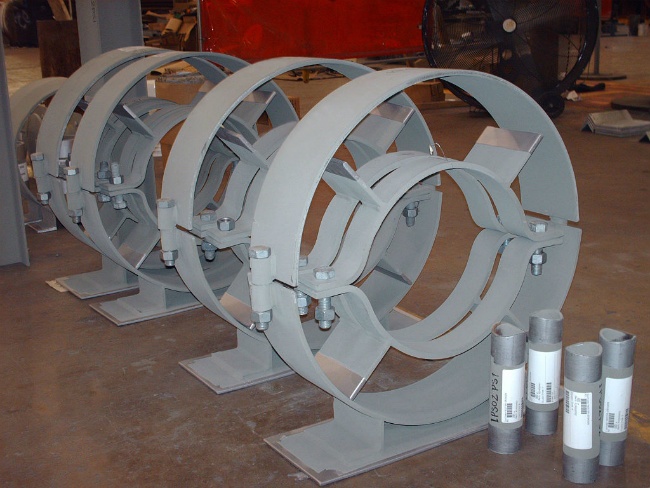
Pipe support design is an important component of piping engineering design. The ideal piping support design and configuration requires the consideration of installation cost, pressure loss effect on production, stress level concern, fatigue failure, support and anchor effects, stability, easy maintenance, parallel expansion capacity and others. It is also the least expensive on a long-term basis. Pipe support design is one of the most critical, and often underestimated aspects of piping systems in Oil & Gas, Petrochemical, Power, Fertilizer, and Process industries. It governs stress distribution, thermal movement, structural loading, insulation integrity, and long-term operational stability.
If the piping system is not adequately supported, many problems may arise. Ideally, the problems that commonly occur are due to bending in the flange joints, sagging of pipes, vibration, excessive movement, higher deflection, line overstress and equipment nozzle overload and faulty piping support design.
In industrial plants, reliability is rarely lost because of pipe material failure. It is lost because of improper pipe support design.
- A poorly restrained high-temperature line.
- An undersized shoe crushing insulation.
- An anchor placed without reaction validation.
- Spring support selected without load variation checks.
These are not drafting errors. They are design failures.
This article provides a comprehensive overview of pipe support design, including key design principles, critical engineering considerations, differences in approach for brownfield and greenfield projects, and the importance of integrated support design. It also explains how Rishabh Pro Engineering delivers specialized pipe support design and engineering services, and the value EPCs and plant owners gain by collaborating with our team.
Objectives of Pipe Support Design
The fundamental objectives of pipe support design include;
- Keep pipe stresses within allowable limits: Properly designed supports ensure that sustained, thermal, and occasional loads do not exceed codeādefined stress limits. By controlling bending, displacement, and restraint forces, support helps maintain structural integrity, prevent fatigue, and ensure longāterm reliability of the piping system.
- Protect connected equipment from overload: Supports distribute loads so pumps, compressors, vessels, and heat exchangers are not subjected to excessive nozzle forces. This prevents misalignment, vibration transfer, and mechanical damage, ensuring equipment longevity and stable operation under varying thermal and pressure conditions.
- Control thermal expansion in a predictable direction: Pipe supports guided movement so thermal expansion occurs in controlled, intentional paths without overstressing the line. Strategically placed anchors, guides, and line stops prevent unwanted displacement, reduce stress accumulation, and maintain system stability during temperature fluctuations.
- Prevent excessive deflection and longāterm creep: Wellāplaced supports limit sagging, pipe deformation, and longāterm creep under sustained loads. Controlled deflection helps maintain slope requirements, flow characteristics, insulation integrity, and overall system alignment, ensuring the piping remains structurally sound throughout its operating lifecycle.
- Maintain insulation and corrosion protection integrity: Supports must accommodate insulation thickness and prevent crushing, thermal bridging, or moisture intrusion. Proper support design preserves insulation performance avoids Corrosion Under Insulation (CUI) and ensures continuous protection of the piping surface in harsh operating environments.
- Ensure constructability and maintainability: Support locations and configurations must allow easy installation, accessibility, and future maintenance work. Good design reduces field rework, simplifies fabrication, and ensures space is available for inspection, repairs, and operational adjustments throughout the piping systemās service life.
To achieve this, support placement must be based on stress analysis results, not rule-of-thumb spacing alone.
How to Design Pipe Supports ā Step-by-Step Engineering Workflow
Below is a structured methodology used in advanced piping support design.
Step 1: Define Load Cases
Pipe support design begins with identifying realistic load conditions:
- Sustained Load (Weight of pipe + fluid + insulation + pressure)
- Operating Load (Sustained + thermal expansion effects)
- Occasional Load (Seismic, wind, relief thrust, water hammer)
Each load case produces different reaction forces at supports.
Step 2: Calculate Pipe Weight
The total weight per unit length (W) includes:
W = Wpipe + Wfluid + Winsulation
Where:
- Wpipe = (Ļ/4) Ć (OD2 ā ID2) Ć material density
- Wfluid = (Ļ/4) Ć ID2 Ć fluid density
- Winsulation = insulation volume Ć insulation density
This total distributed load is critical for span calculations.
Step 3: Determine Allowable Span
Maximum support spacing depends on:
- Pipe diameter
- Material modulus of elasticity
- Allowable deflection
- Uniform load
The classic beam deflection formula for simply supported pipe:
Ī“ = (5wL4) / (384EI)
Where:
- Ī“ = allowable deflection
- w = distributed load
- L = span length
- E = modulus of elasticity
- I = moment of inertia
Rearranging allows engineers to determine maximum allowable span.
This is a foundational calculation in the design of pipe supports.
Step 4: Evaluate Thermal Expansion
Thermal expansion:
ĪL = α Ć L Ć ĪT
Where:
- α = coefficient of thermal expansion
- L = original length
- ĪT = temperature change
Support strategy must allow controlled expansion without overstress.
This determines placement of:
- Anchors
- Guides
- Line stops
- Expansion loops
- Spring support
Step 5: Stress Analysis Validation
Using tools such as CAESAR II, piping support design is validated under:
- Sustained loads
- Thermal loads
- Occasional loads
Engineers check:
- Code stress compliance
- Equipment nozzle loads
- Support reactions
- Displacements
This ensures compliance with ASME limits.
Step 6: Select Support Types
The design of pipe supports includes selecting from:
- Rigid support
- Variable spring supports
- Constant spring supports
- Anchors
- Guides
- Line stops
- Trunnions
- Pipe shoes
- U-bolts and clamps
Selection depends entirely on displacement and load variation.
For example: Variable Spring supports are acceptable when load variation is within 25%.
Critical Considerations for Pipe Support Design
Advanced piping support design must account for more than structural load.
Below are expanded considerations inspired by leading industrial practices.
Insulation Interface and Crushing Risk
Insulated pipes require special attention. If a pipe rests directly on structural steel:
- Insulation may compress
- Thermal bridging may occur
- Corrosion under insulation risk increases
Solutions include:
- Pipe shoes to elevate pipe above steel
- High-density insulation inserts
- Load-bearing insulation materials
Proper pipe support design protects insulation integrity and energy efficiency.
Hot vs Cold Conditions
A support that works in cold conditions may fail under hot condition.
Design must consider:
- Cold installation loads
- Hot operating loads
- Cold spring adjustments
- Spring hanger cold settings
Ignoring hot load cases leads to unexpected equipment overload.
Anchor Design and Structural Validation
Anchors absorb full reaction forces and thrust loads.
They must be designed for:
- Axial loads
- Shear forces
- Bending moments
Structural steel and concrete foundations must be verified accordingly.
Friction Forces in Sliding Supports
Sliding supports introduce friction forces:
F = μ à N
Where:
- F = friction
- μ = coefficient of friction
- N = normal reaction load
These friction forces influence expansion behavior and must be included in stress models.
Vibration and Dynamic Loads
Lines connected to pumps, compressors, or turbines require vibration assessment.
Design considerations include:
- Reduced span length
- Snubbers for dynamic restraint
- Anti-vibration support
- Avoiding resonance conditions
Piping support design must account for dynamic amplification.
Seismic and Wind Load Considerations
Occasional loads from seismic events require:
- Seismic restraints
- Directional guides
- Lateral bracing
Wind loads affect elevated pipe racks and outdoor lines.
Occasional load combinations must satisfy stress limits.
Standards for Effective Pipe Support Design
Effective piping support must align with recognized international codes and standards.
These typically include:
- ASME B31.3 (Process Piping)
- ASME B31.1 (Power Piping)
- MSS-SP-58 (Pipe Hangers and Supports ā Materials, Design, and Manufacture)
- MSS-SP-69 (Pipe Hangers and Supports ā Selection and Application)
- MSS-SP-89 (Pipe Hangers and Supports ā Fabrication and Installation Practices)
- ASME Section II (Material Specifications)
These standards govern:
- Allowable stress limits
- Load combinations
- Material strength
- Support component design
- Installation practices
- Inspection requirements
A proper pipe support design must begin with code compliance before proceeding into load analysis and detailing.
Pipe Support Design for Brownfield vs Greenfield Projects
In greenfield projects:
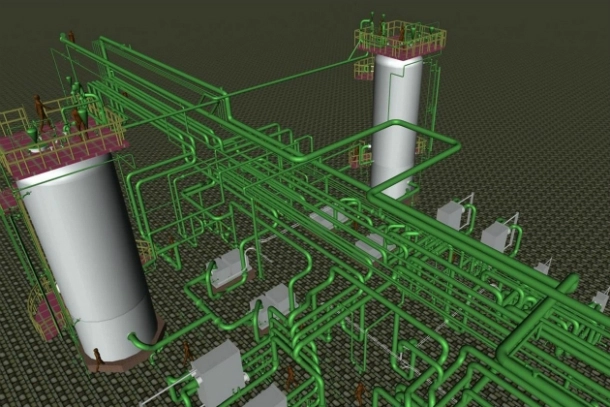
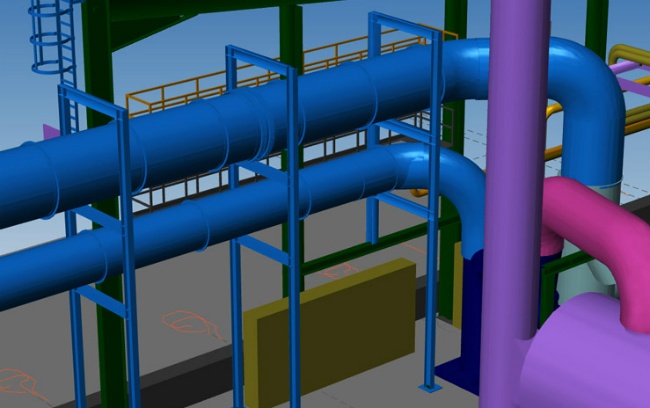
- Support locations optimized during 3D modeling
- Early coordination between piping and structural teams
- Stress analysis integrated with routing
- Efficient load distribution into steel structures
Greenfield projects allow proactive optimization.
In brownfield projects:
- Existing steel constraints limit support placement
- Legacy stress issues may require corrective engineering
- Field verification becomes critical
- Additional support is often required to stabilize older systems
Brownfield support engineering is typically more complex due to space limitations and operational continuity requirements.
Integrating Pipe Support Design with Multidisciplinary Engineering
Effective piping support design requires coordination between:
- Piping engineering
- Structural engineering
- Mechanical equipment teams
- Civil foundation design
- Insulation specialists
Reaction loads must be shared early. Further, routing decisions must reflect expansion philosophy. And, structural steel must account for actual reactions, not assumed loads. In the end, early integration helps prevent costly rework.
How does Rishabh Pro Engineering Supports Piping Support Design & Engineering?
Designing robust piping support systems require more than checkboxes, it demands deep technical insight, multidisciplinary coordination, and proven execution experience. Thatās where Rishabh Pro Engineering stands apart.
As a global multidisciplinary design engineering partner, we deliver comprehensive support for piping and associated systems, from conceptual evaluation and stress analysis to detailed design, 3D modeling, and constructability review. Our approach helps clients reduce risk, improve safety, and ensure that piping systems perform reliably throughout the lifecycle of their plants. At Rishabh Pro Engineering, pipe support design is delivered as a stress-integrated, multidisciplinary discipline.
Our approach includes:
- 3D model-based routing and support placement
- Code-compliant stress analysis
- Reaction load validation with structural teams
- Thermal expansion modeling
- Insulation-conscious support detailing
- Brownfield corrective redesign capability
We do not treat piping support design as drafting. We treat it as risk mitigation.
Our deliverables include:
- Support general arrangements
- Isometric support details
- Spring selection reports
- Load summary sheets
- Structural coordination data
This ensures constructible, compliant, and reliable systems
What Rishabh Pro Engineering Brings to the Table?
- End-to-end detailed engineering, from advanced 3D piping models to constructible support layouts and fabrication deliverables.
- Integrated stress and flexibility analysis using industry-standard tools to identify optimum support locations and movement allowances.
- Interdisciplinary coordination between piping, structural, mechanical, and civil disciplines, ensuring realistic load transfer and constructability.
- International standards compliance, aligning designs with ASME codes and client specifications across global projects.
- Constructability and field readiness, reducing onsite rework and improving installation efficiency.
Rather than treating support design as a drafting exercise, Rishabh Pro Engineering applies a stress-aware, model-driven methodology that proactively addresses movement, thermal effects, vibration, and dynamic load interactions.
How do Rishabh Pro Engineering Solves Real Engineering Challenges?
- Stress-Driven Support Layout Optimization: By coupling stress analysis with 3D routing, the team identifies ideal support positions that minimize unnecessary loads on equipment nozzles and prevent over-restraining thermal movement.
- Balanced Thermal Expansion Strategies: Advanced modeling ensures expansion allowances are accommodated by guides, anchors, and springs where needed, avoiding costly field modifications later.
- Load-Aware Structural Coordination: Support reaction loads are validated with structural teams to ensure pipe rack steel and foundations are designed for actual loads, not assumptions.
- Brownfield Corrective Engineering: In existing facilities, we assess legacy systems, identify overstressed lines, and redesign support layouts to improve stability and compliance.
- Field-Ready Deliverables: We produce listed collaterals;
- Support drawings
- General arrangements
- Isometrics
- Material take-offs
- Erection documentation
All deliverables are created to support efficient fabrication and installation.
Real Life Case Studies
Here are a few real project examples you can reference to showcase Rishabh Pro Engineeringās track record and technical depth:
Piping Detailed Engineering for 105 MW Power Plant
- Client: EPC contractor for a major power generation facility
- Scope: Complete detailed piping engineering and 3D modeling for plant systems, including small-bore and mainline piping.
- Value Delivered: Integrated routing, stress-aware support positioning, and coordinated 3D deliverables helped streamline construction execution.
Multi-Discipline Engineering for Petrochemical Reactor Area
- Client: ACE plant operator in petrochemical sector
- Scope: Multi-discipline engineering support for reactor area of ACE plant for reactor and heat exchanger systems.
- Value Delivered: Comprehensive support drawings and GA deliverables that aligned with ASME B31.3 standards, enabling coordinated fabrication and installation.
3D Piping Modeling ā Lube Oil Re-Refining Plant
- Client: UAE-based multinational engineering team
- Scope: Piping detailed engineering and 3D modeling of entire piping network.
- Value Delivered: Precise 3D models that helped optimize routing, verify support positions, and reduce design conflicts.
Oil & Gas Metering Skid Detailing and Structural Support
- Client: Manufacturer of metering and hydraulic control systems
- Scope: Structural design, piping isometrics, and support detailing for a skid package.
- Value Delivered: Tight integration of piping support design with structural and fabrication deliverables ā enhancing constructability and compliance with ASME & BS codes.
What EPCs and Owners Gain by Partnering with Rishabh Pro Engineering?
- Risk Mitigation: Early stress analysis and support design prevents costly field fixes.
- Improved Safety & Compliance: Designs aligned with international codes ensure operational safety and regulatory approval.
- Constructability & Execution Ease: Clear fabrication documents and coordinated models reduce onsite delays.
- Cost Efficiency: Better design reduces material waste, rework, and overall project risk.
- Global Delivery Model: With teams across India, the UK, and US, Rishabh Pro Engineering delivers quality at competitive economics.
Final Words
Pipe support design ultimately defines the reliability and lifecycle performance of any industrial piping system. As a critical element of comprehensive piping engineering services, it governs stress control, thermal movement, structural interaction, and equipment protection. When engineered with analysis-driven precision and multidisciplinary coordination, support prevents vibration, overload, and long-term deformation. The result is safer operations, reduced maintenance, and sustained plant uptime. In modern process industries, effective pipe support design is not optionalāit is fundamental to operational stability and risk-free performance.