Offshore oil and gas developments are among the most complex engineering projects in the energy industry. Whether it involves deepwater production systems, subsea infrastructure, or floating production facilities such as Floating Production Storage and Offloading (FPSO) units, these projects demand careful planning long before construction begins.
One of the most critical stages in this planning process is Front End Engineering Design (FEED). FEED establishes the technical and commercial foundation of offshore projects by defining project scope, engineering philosophy, major equipment specifications, and overall execution strategy.
For FPSO and offshore developments, where installation conditions are complex and project costs are high, the quality of front-end engineering design for FPSO directly impacts project feasibility, safety, and operational efficiency. A well‑executed FEED study reduces technical and commercial uncertainties while enabling a smooth transition into detailed engineering and procurement.
This article provides a comprehensive overview of FPSO systems and the role and objectives of Front-End Engineering Design, covering key FEED considerations, deliverables, multidisciplinary coordination, challenges, and best practices essential for successful FPSO project execution.
Understanding FPSO Systems
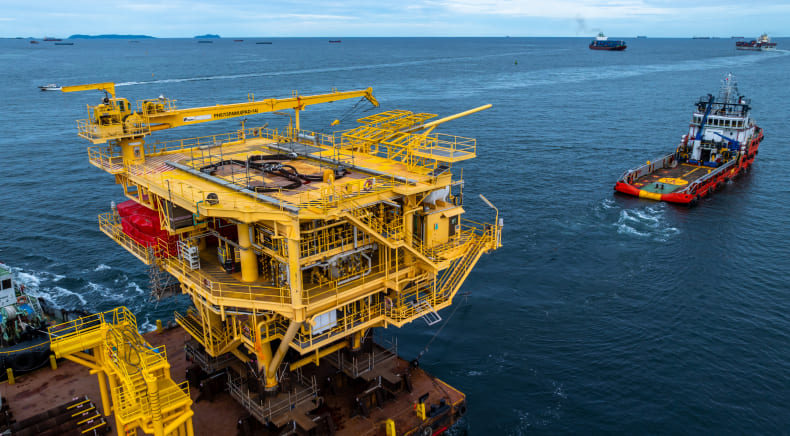
In offshore oil and gas developments, FPSO units play a critical role by enabling production in deepwater and remote locations where fixed platforms are not feasible. Functioning as floating processing plants, FPSOs receive hydrocarbons from subsea wells, process oil, gas, and water onboard, store crude within the hull, and offload it safely to shuttle tankers. Their flexibility makes them especially suitable for marginal fields and projects with uncertain production life, where cost efficiency and redeployability are key.
An FPSO integrates complex systems such as processing modules, storage tanks, turret mooring systems, and offloading facilities, all of which must operate reliably in harsh marine environments. This complexity is why Front-End Engineering Design for FPSO is a critical phase for projects. Front End Engineering Design defines system configuration, sizing, layout, and integration early in the lifecycle, ensuring technical feasibility, cost certainty, risk reduction, and a smooth transition into detailed engineering and procurement.
Role and Objectives of Front End Engineering Design in FPSO Projects
FEED typically follows conceptual or pre-FEED studies and precedes detailed engineering. At this stage, engineering teams develop a comprehensive design framework that outlines how the offshore facility will operate, be constructed, and maintained.
In offshore and FPSO projects, Front End Engineering Design serves several important objectives:
- Establishing the technical configuration of the facility
- Defining process design parameters
- Identifying major equipment specifications
- Estimating capital expenditure (CAPEX)
- Evaluating constructability and installation feasibility
- Reducing engineering and procurement risks
For FPSO projects in particular, FEED plays a crucial role in determining whether the project will involve conversion of an existing vessel or a new-build FPSO, which significantly impacts design decisions and project costs.
Key Engineering Considerations in Front End Engineering Design for FPSO
FEED for FPSO projects brings together multiple technical disciplines to shape safe, efficient, and cost-effective offshore developments. At this stage, critical design decisions are made that influence layout, operability, safety, and long-term performance under challenging marine and environmental conditions and regulatory requirements from outset.
Let’s discuss some of the essential considerations;
Process Design and Production System Definition
The process engineering scope is one of the core components of FEED for FPSO projects. At this stage, engineers define how the hydrocarbons will be processed from wellhead to export.
Key activities include:
- Development of Process Flow Diagrams (PFDs)
- Preparation of Piping and Instrumentation Diagrams (P&IDs)
- Heat and material balance calculations
- Equipment sizing for separators, compressors, pumps, and heat exchangers
- Determination of production capacity and operating conditions
For FPSO facilities, process systems typically include oil separation, gas compression, water treatment, gas dehydration, and produced water handling. These systems must be designed to operate efficiently within the limited deck space available on floating vessels. Process design decisions made during FEED influence several downstream activities, including piping layout, equipment arrangement, and utility system design.
Layout Planning and Space Management
One of the most challenging aspects of Front-End Engineering Design for FPSO comprises of efficient space utilization. Unlike onshore plants, offshore facilities have strict limitations in terms of deck area, weight capacity, and structural load distribution.
During FEED, designers develop preliminary layout models that define:
- Equipment arrangement on the topside modules
- Access routes for operations and maintenance
- Piping routing corridors
- Structural support requirements
- Safety distances between hazardous equipment
Advanced 3D modeling tools are often used during this phase to visualize equipment placement and ensure that maintenance access and safety requirements are adequately addressed. Effective layout planning helps avoid costly redesigns during detailed engineering and ensures that fabrication and module integration activities can proceed smoothly.
Safety and Regulatory Compliance
FPSO facilities operate in hazardous environments where safety considerations are paramount. FEED engineering must therefore integrate safety and regulatory compliance into the design from the earliest stages.
Some of the key safety analyses performed during Front End Engineering Design include:
- HAZID (Hazard Identification) studies
- HAZOP (Hazard and Operability) analysis
- Fire and explosion risk assessment
- Escape and evacuation planning
- Emergency shutdown system definition
Offshore projects must also comply with international standards and classification requirements from organizations such as:
- DNV
- ABS
- API
- ISO
- Offshore regulatory bodies specific to the project location
Ensuring compliance during FEED reduces the likelihood of regulatory delays and design modifications during later project phases.
Structural and Marine Engineering Considerations
For FPSO projects, FEED engineering must also address marine and structural aspects associated with floating production facilities.
Important considerations include:
- Hull structural assessment for FPSO conversion projects
- Mooring system design
- Turret system configuration
- Stability analysis under operational and environmental conditions
- Load calculations for topside modules
- Integration of process equipment with vessel structure
This analysis helps ensure that the FPSO can safely operate under harsh offshore conditions such as strong currents, waves, and wind loads. Structural engineering teams work closely with process and piping designers to confirm that equipment weight distribution and support structures are compatible with the vessel’s structural limitations.
Subsea Integration and Flow Assurance
Offshore production systems often rely on subsea infrastructure that connects well to the FPSO or offshore platform. Front End Engineering Design must therefore consider subsea integration and flow assurance aspects.
This includes:
- Subsea pipeline routing
- Riser configuration
- Umbilical systems
- Flow assurance analysis
- Hydrate and wax formation mitigation strategies
- Pigging and pipeline inspection requirements
Flow assurance studies are particularly important for deepwater projects where temperature and pressure variations can lead to hydrate formation or wax deposition in pipelines. Addressing these issues during FEED engineering helps prevent operational challenges once the facility becomes operational.
Cost Estimation and Project Planning
One of the primary objectives of FEED is to generate a reliable cost estimate. Offshore and FPSO projects involve large capital investments, and stakeholders require accurate financial projections before committing to project execution.
FEED deliverables typically support:
- CAPEX estimation
- Procurement strategy planning
- Fabrication and module construction planning
- Project execution scheduling
- Risk assessment and mitigation strategies
A well-developed FEED package allows project owners to make informed decisions regarding project viability, contracting strategy, and financing arrangements.
Digital Engineering and 3D Modeling in FEED
Modern offshore Front End Engineering Design increasingly relies on digital engineering tools to improve design accuracy and collaboration between engineering disciplines.
Technologies such as:
- Intelligent 3D modeling platforms
- Simulation tools
- Integrated data environments
It helps engineers visualize the offshore facility and evaluate design options more effectively.
Early 3D modeling also improves communication between stakeholders including EPC contractors, fabrication yards, and equipment vendors.
Key Front End Engineering Design Deliverables for FPSO Projects
At the FEED (Front-End Engineering Design) stage of an FPSO project, the focus is on translating concept into a well-defined, execution-ready plan. The deliverables created here form the backbone of cost estimation, risk reduction, and smooth project execution.
Listed below are core FEED deliverables;
- Process Design Package: Includes Process Flow Diagrams (PFDs), Heat & Material Balances, and initial P&IDs. These define how hydrocarbons will be processed, treated, and exported.
- Equipment Specifications & Datasheets: Detailed specifications for critical equipment like separators, compressors, pumps, and heat exchangers to guide procurement and vendor engagement.
- Plot Plans & Layouts: Preliminary general arrangement drawings showing topside module layouts, equipment positioning, and space optimization on the FPSO deck.
- Piping & Instrumentation Inputs: Line sizing, piping classes, valve philosophy, and instrument selection to ensure safe and efficient operations.
- Utility & Offsite Systems Design: Covers power generation, water systems, flaring, and other support utilities essential for continuous FPSO functioning.
- Safety & Risk Studies: HAZID, HAZOP, and preliminary QRA studies to identify and mitigate operational and process risks early.
- Weight, CAPEX & Schedule Estimates: Key inputs for project viability, including weight control reports, cost estimation, and execution timelines.
- 3D Model (Early-Stage): A basic 3D model to visualize integration, identify clashes, and improve multidisciplinary coordination.
- Procurement Strategy Inputs: Vendor lists, long-lead item identification, and contracting strategies to streamline downstream execution.
How Multidisciplinary Coordination in FPSO Supports Front End Engineering Design?
In FPSO Front End Engineering Design, multidisciplinary coordination is not just helpful, it’s essential. With topside processing, hull systems, mooring, subsea tie-ins, and utilities all coming together, alignment across disciplines ensures the design is practical, safe, and executable. At the FEED stage, decisions made by one discipline directly influence others. For example, process design defines equipment sizing, which impacts layout, structural loads, and piping complexity. Without coordination, this can quickly lead to clashes, rework, or inefficient designs.
- Effective collaboration between process, mechanical, piping, electrical, instrumentation, and structural teams helps create a well-integrated design. Regular design reviews, model coordination, and clear communication channels are key to keeping everyone aligned.
- Layout optimization is a major outcome of strong multidisciplinary coordination. Ensuring proper equipment spacing, safe access, maintainability, and compliance with safety standards requires input from multiple teams working together, not in silos.
- Another critical aspect is interface management. FPSOs involve multiple stakeholders, EPCs, operators, and vendors. Coordinating these interfaces early during FEED helps avoid costly changes during detailed engineering and execution.
- Digital tools like 3D modeling and integrated engineering platforms play a vital role in enabling real-time collaboration, clash detection, and design validation across disciplines.
Ultimately, strong multidisciplinary coordination during FEED reduces risks, improves cost accuracy, and lays a solid foundation for successful FPSO project execution.
Challenges in FPSO Front End Engineering Design
Front End Engineering Design for FPSO projects brings together multiple technical disciplines to shape safe, efficient, and cost-effective offshore developments. At this stage, critical design decisions are made that influence layout, operability, safety, and long-term performance under challenging marine and environmental conditions and regulatory requirements from outset.
Let’s discuss some of the potential challenges;
- Complex integration of multiple systems: FPSOs bring together topside process systems, marine systems, utilities, and storage in one floating unit. During Front End Engineering Design, ensuring all these systems work seamlessly together—without clashes or performance gaps—is a major coordination challenge.
- Space and weight constraints: Unlike onshore facilities, FPSOs have strict deck space and weight limitations. Engineers must constantly balance functionality with compact design, often making tough trade-offs early in the FEED stage.
- Harsh offshore environment considerations: Designs must account for wave motion, corrosion, wind loads, and extreme weather. This makes equipment selection, layout planning, and structural design far more complex than typical plant engineering.
- Uncertainty in reservoir data: Front End Engineering Design often begins when reservoir characteristics are still evolving. This creates challenges in sizing process equipment and designing for flexibility without overdesigning and increasing costs.
- Interface management across stakeholders: Multiple stakeholders like EPCs, OEMs, shipyards, operators—are involved. Aligning technical requirements, timelines, and deliverables during FEED requires strong interface management and clear communication.
- Regulatory and classification compliance: FPSOs must meet stringent international maritime regulations and classification society rules. Ensuring compliance from the Front-End Engineering Design itself is critical to avoid costly redesigns later.
- Cost and schedule pressures: Clients expect optimized CAPEX and faster project timelines. Front End Engineering Design teams must deliver accurate engineering with limited time, leaving little room for iteration.
- Designing for operability and maintainability: Since FPSOs operate in remote offshore locations, maintenance access, safety, and uptime become critical design considerations right from FEED.
Best Practices for Effective FPSO FEED
Effective FPSO Front End Engineering Design relies on disciplined engineering, early stakeholder alignment, and informed decision-making. Applying proven best practices during this phase helps optimize layout, manage risk, control costs, and ensure safety, operability, and flexibility, creating a strong foundation for transition into detailed engineering and project execution.
Listed below are some of the best practices based on our experience;
- Start with a clear understanding of field conditions and reservoir characteristics. Every FPSO is unique, so FEED must reflect production profiles, fluid properties, and expected lifecycle variations.
- Prioritize early alignment between stakeholders—operators, EPCs, and technology providers. This reduces redesigning cycles and ensures smoother decision-making later in the project.
- Focus on robust process design and simulation. Accurate sizing of separators, compressors, and treatment systems during Front End Engineering Design prevents costly changes during detailed engineering.
- Ensure weight and space optimization from the beginning. Since FPSOs have strict top-side constraints, layout planning during Front End Engineering Design plays a critical role in feasibility.
- Incorporate modularization strategies wherever possible. Designing modules early improves fabrication efficiency and reduces offshore installation time.
- Address operability and maintainability in the design stage. Easy access, safe layouts, and maintenance-friendly equipment placement go a long way in long-term performance.
- Integrate safety and risk assessments (HAZID/HAZOP) early in FEED to identify potential hazards and design mitigation strategies proactively.
- Plan for future flexibility and tiebacks. FPSOs often need to handle varying production scenarios, so designing with adaptability in mind is essential.
- Use digital tools and 3D modeling to validate layouts, detect clashes, and improve design accuracy before moving to detailed engineering.
- Finally, maintain strong documentation and design standardization. Clear deliverables ensure seamless transition from Front End Engineering Design to EPC and reduce execution risks.
How Rishabh Pro Engineering Helps With Front End Engineering Design For FPSO?
Rishabh Pro Engineering supports Front End Engineering Design (FEED) for FPSO projects by bringing together multidisciplinary expertise across process, piping, mechanical, electrical, and instrumentation engineering—ensuring all key systems are aligned from the start.
- Our team works closely with clients to translate conceptual requirements into practical, execution-ready engineering solutions, reducing ambiguity before the detailed design phase begins.
- We develop optimized process design packages, including process flow diagrams (PFDs), heat and material balances, and early-stage equipment sizing, helping stakeholders make informed technical https://www.rishabheng.com/basic-engineering-services/process-design/decisions.
- In FPSO projects where space and weight constraints are critical, we focus on layout optimization and modularization strategies to improve operability and maintainability.
- Rishabh Pro Engineering supports piping and instrumentation diagram development by preparing initial P&IDs, defining control philosophies, and ensuring compliance with offshore safety and regulatory standards.
- We assist in vendor engagement by preparing technical specifications, datasheets, and bid evaluation inputs—enabling better procurement decisions early in the project lifecycle.
- Our FEED approach also emphasizes risk identification and mitigation, helping clients address constructability, operability, and integration challenges before they escalate.
- With experience supporting global offshore and energy projects, we ensure alignment with international codes, standards, and best practices.
- By acting as a reliable engineering partner, we help clients improve cost predictability, reduce rework, and accelerate project timelines—laying a strong foundation for successful FPSO execution.
Final Words
Front End Engineering Design plays a decisive role in the success of offshore and FPSO projects, as it establishes the technical foundation that guides subsequent project phases. Through comprehensive front end engineering design services , project stakeholders can reduce uncertainties, improve cost estimation accuracy, and develop a well-structured execution strategy. Critical aspects such as process design, layout planning, safety compliance, marine engineering, subsea integration, and cost analysis must be carefully evaluated during this stage to ensure design reliability. Given the multidisciplinary nature of offshore developments, effective collaboration between experienced engineering teams and project stakeholders is essential for delivering robust packages. As offshore energy projects continue to grow in complexity and scale, well-executed FEED engineering will remain a key factor in enabling safe, efficient, and economically viable project execution.