In modern industrial facilities, detailed engineering of piping systems is no longer just a downstream design activity — it is a strategic engineering phase that directly impacts plant safety, operational efficiency, construction timelines, and lifecycle reliability. Piping systems act as the circulatory network of industrial plants, connecting critical equipment, enabling process continuity, and ensuring safe fluid handling across operations.
When piping detailed engineering is executed with precision and multidisciplinary coordination, plants achieve higher uptime, improved safety compliance, optimized maintenance schedules, and reduced lifecycle costs. On the other hand, inadequate engineering of piping systems can lead to design clashes, operational failures, increased shutdown frequency, and expensive rework during construction or operation.
Today, industrial sectors including oil & gas, chemicals, energy transition, manufacturing, and utilities rely heavily on robust detail engineering for piping systems to ensure projects move from concept to operation seamlessly. This growing dependency makes it one of the most value-driven engineering phases in any industrial project.
What Does Detailed Engineering of Piping Systems Really Mean?
Detailed engineering of piping systems is the stage where conceptual design and basic engineering outputs are transformed into construction-ready deliverables. This phase converts process design intent into precise layouts, fabrication drawings, installation details, and procurement-ready documentation.
Typical scope covered would include:
- Final routing of piping based on equipment placement and site constraints
- Development of piping isometrics and fabrication drawings
- Pipe stress and flexibility analysis
- Preparation of piping material specifications and MTOs
- Pipe support design and load calculations
- Compliance verification with global codes and project standards
- Multidisciplinary coordination with structural, electrical, and instrumentation teams
The goal of detailed piping engineering is to ensure that piping systems are not just technically correct but also buildable, maintainable, and safe for long-term operations.
Why Piping Detailed Engineering Has Become More Complex Today
The complexity of detail engineering for pipes has increased significantly over the last decade due to technological advancements, sustainability expectations, and evolving safety standards.
- Increasing Plant Density and Compact Layouts: Modern plants are designed to maximize production capacity within smaller physical footprints. This increases routing congestion, making piping detailed engineering more challenging. Engineers must now rely on advanced 3D modeling, clash detection tools, and multidisciplinary coordination.
- Stricter Safety and Compliance Requirements: Regulatory bodies worldwide have introduced stricter safety and environmental standards. This requires detailed engineering of piping systems to incorporate advanced safety design philosophies, risk mitigation strategies, and compliance documentation.
- Faster Project Execution Expectations: Industrial clients now expect shorter project timelines. This requires parallel execution of piping detailed engineering along with other engineering disciplines, increasing coordination complexity.
- Brownfield and Revamp Engineering Challenges: Many industrial projects today involve expansions or modifications. Detail engineering for pipes in brownfield environments requires accurate as-built validation, tie-in planning, and shutdown optimization.
Rishabh Pro Engineering’s Approach to Piping Detailed Engineering
At Rishabh Pro Engineering, the focus is on delivering piping systems that are not just technically correct, but practically deployable and future ready.
Intelligent Piping Layout and 3D Modeling
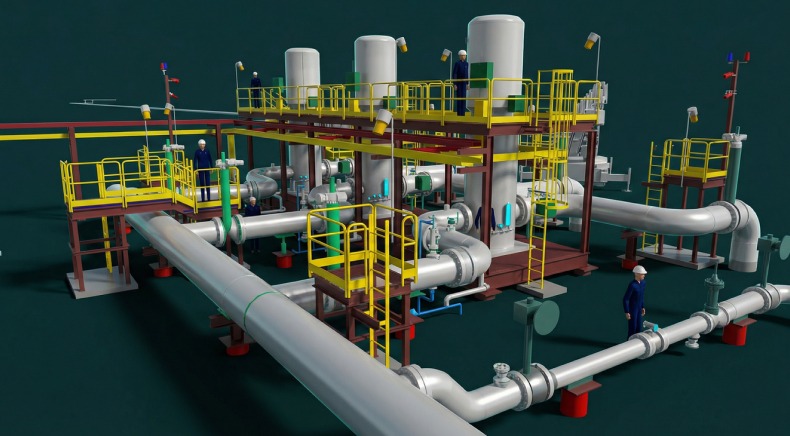
Using advanced 3D plant design platforms, the team develops highly accurate digital plant models that help clients visualize the final facility before construction begins.
This enables:
- Early clash detection
- Optimized routing for pressure drops and accessibility
- Better maintenance access planning
- Improved construction sequence
- Reduced site rework
3D modeling also improves collaboration between EPCs, owners, and contractors, ensuring alignment across stakeholders.
Pipe Stress and Flexibility Analysis
Piping systems operate under multiple loading conditions — thermal expansion, pressure loads, vibration, wind loads, and operational loads.
Rishabh Pro Engineering performs detailed stress and flexibility analysis to:
- Protect equipment nozzles from excessive loads
- Prevent piping fatigue failures
- Optimize support placement and design
- Ensure compliance with codes like ASME B31.3
This directly improves plant safety and long-term reliability.
Piping Material Engineering and MTO Development
Material selection directly impacts plant safety, corrosion resistance, lifecycle cost, and maintenance requirements.
The team develops piping class specifications based on:
- Process conditions (temperature, pressure, corrosion environment)
- Industry standards and project specifications
- Cost and procurement optimization
- Availability and constructability considerations
Accurate Material Take-Offs (MTOs) also help clients control procurement costs and reduce waste.
Brownfield Modifications and Tie-In Engineering
Many facilities today require upgrades, expansions, or debottlenecking projects. Brownfield piping engineering requires a different level of planning.
Rishabh Pro Engineering supports brownfield projects through:
- Laser scan–based modeling and as-built validation
- Tie-in planning with minimal shutdown impact
- Retrofit design for existing plant constraints
- Updating legacy drawings and documentation
This ensures modifications are executed safely and efficiently.
As-Built Documentation and Lifecycle Support
Accurate documentation is essential for plant lifecycle management.
The team provides:
- Updated as-built drawings
- Digital model updates
- Maintenance-ready documentation
- Future expansion engineering support
This reduces long-term operational risks and improves asset management.
Codes and Standards Followed in Piping Detailed Engineering
Compliance is a critical pillar of piping detailed engineering. Following global codes ensures piping systems are safe, reliable, and aligned with regulatory requirements.
Major International Codes
- ASME B31.3 – Process Piping
- ASME B31.1 – Power Piping
- API Standards (Process and Equipment Interfaces)
- ISO Piping Design Standards
- ASTM Material Standards
- MSS Fabrication and Installation Standards
Project-Specific Compliance
- Client Engineering Standards
- EPC Design Specifications
- Regional Safety and Regulatory Requirements
Adherence to these codes ensures every stage of detailed engineering of piping systems meets global safety and performance expectations.
Software Tools Used in Modern Detailed Engineering of Piping Systems
Digital tools have transformed how piping detail engineering is executed today. Advanced software improves accuracy, reduces design errors, and enhances project collaboration.
3D Plant Design and Modeling Tools
These platforms help engineers visualize plant layouts, perform clash detection, and optimize routing.
Stress and Flexibility Analysis Software
- CAESAR II
- AutoPIPE
These tools ensure piping systems can withstand thermal expansion, vibration loads, pressure fluctuations, and environmental loads.
Design Review and Collaboration Platforms
- Navisworks
The Real Business Impact of Accurate Piping Detailed Engineering
Well-executed piping detailed engineering delivers measurable value across the project lifecycle.
During Engineering Phase
- Faster design approvals
- Better stakeholder coordination
- Reduced design revisions
During Construction Phase
- Faster installation
- Reduced site modifications
- Improved safety performance
During Operations Phase
- Higher plant uptime
- Lower maintenance costs
- Improved process efficiency
- Easier future expansion
Why Clients Choose Rishabh Pro Engineering?
Clients partner with Rishabh Pro Engineering for detailed engineering of piping systems because of consistent project value delivery.
- Multidisciplinary Engineering Strength: Integrated engineering ensures optimized system-level performance.
- Global Industrial Project Experience: Exposure across industries helps apply cross-sector best practices.
- Digital Engineering Driven Execution: Advanced software improves design accuracy and project speed.
- Buildability-Focused Engineering: Designs are developed considering real construction and operational conditions.
- Flexible Engagement Models: Supports EPCs, operators, and owners across project phases.
Real Life Use Cases
Piping Detailed Engineering Of HRSG Units
Client: South Korea-based global power plant equipment and services provider
Project Overview: Piping detailed engineering and 3D modeling support for Heat Recovery Steam Generator (HRSG) units supporting power and desalination plants, including equipment, structural, and complete piping system modeling.
Challenge: The project required precise piping detail engineering in a complex plant environment involving HRSG equipment, multiple pressure systems, structural platforms, and small-bore piping — all within tight timelines and strict quality expectations.
Solution: Rishabh Pro Engineering executed end-to-end detailed engineering of piping systems, including 3D modeling, support modeling, stress isometric extraction, fabrication drawings, and MTO preparation using an offshore delivery execution model.
Piping Detail Engineering And 3D Modeling For Refinery Tank Farm Area
Client: US-based Global Engineering & Technology Company
Project Overview: Delivered piping detailed engineering and 3D modeling for a refinery tank farm area in India, covering equipment piping, fire-fighting and foam systems, structures, instrumentation, and supports using intelligent 3D modeling and multidisciplinary coordination.
Challenge: Managing complex tank farm piping layouts, ensuring accurate multidisciplinary coordination, maintaining client specifications customization, and delivering clash-free models while supporting detailed deliverables such as GA drawings, IFC isometrics, and MTO extraction within project timelines.
Solution: Executed end-to-end piping detail engineering using PDS-based 3D modeling, conducted design reviews with clients, generated clash reports, MTOs, and construction-ready deliverables while ensuring seamless coordination across disciplines.
Piping Detail Engineering For Moisture Control & De-Hazing Facility
Client: An Asia-based EPC Contractor
Project Overview: Rishabh Pro Engineering provided piping detailed engineering support for the moisture control and de-hazing facility at Mina Abdullah (MAB) Refinery, Kuwait. The project involved complete setup, engineering administration, and customization of project specifications, supporting refinery process improvement through precise detailed engineering of piping systems.
Challenge: The project required high-accuracy piping detail engineering within refinery constraints, including multidisciplinary coordination, specification customization, and delivery of multiple construction-ready outputs within a tight 8-month schedule.
Solution: Delivered complete detail engineering for pipes including 3D modeling, piping layouts, support marking, isometric extraction, MTO preparation, and GA drawings, ensuring buildable, standards-compliant, and construction-ready piping deliverables.
Industries Supported by Rishabh Pro Engineering
The team supports piping detailed engineering requirements across multiple sectors, including:
- Oil & Gas
- Refineries and Petrochemicals
- Hydrogen and Energy Transition Projects
- Chemical and Specialty Chemical Plants
- Manufacturing Facilities
- Cryogenic and Industrial Gas Facilities
- Power and Utilities
- Water and Wastewater Treatment
This cross-industry experience allows the team to apply best practices from one sector to solve challenges in another.
Looking Ahead: The Future of Piping Detailed Engineering
The future of detailed engineering of piping systems will be driven by:
- AI-assisted design validation
- Digital twin integration
- Modular piping fabrication strategies
- Sustainability-driven design optimization
- Real-time plant performance data integration
Organizations investing in advanced piping detail engineering capabilities will gain a competitive advantage in project execution and plant performance.
Final Words
Piping engineering services plays a vital role in overall plant performance, influencing safety, regulatory compliance, construction quality, and long-term operational reliability. When executed with strong technical expertise and cross-discipline coordination, it helps minimize project risks while improving efficiency across the plant lifecycle. With multidisciplinary capabilities, advanced digital tools, and adherence to global standards, Rishabh Pro Engineering supports industrial projects with practical, construction-ready engineering solutions. From new facility development to plant upgrades and revamp projects, the focus remains on delivering systems that perform reliably under real operating conditions and support sustainable plant operations.