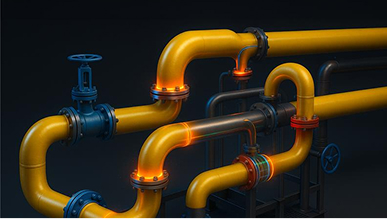
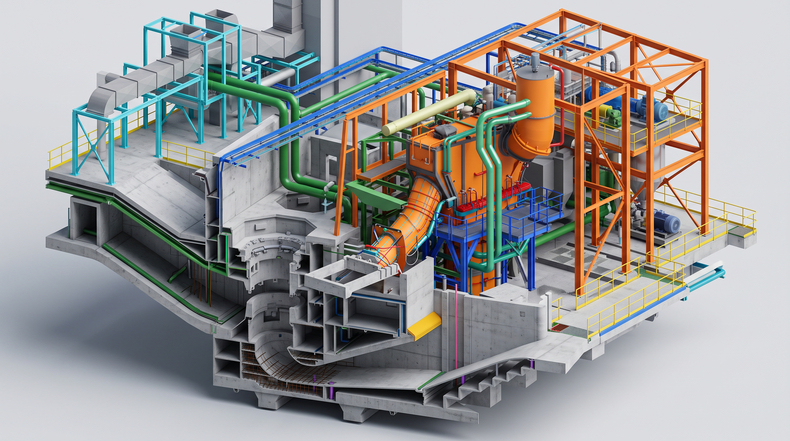
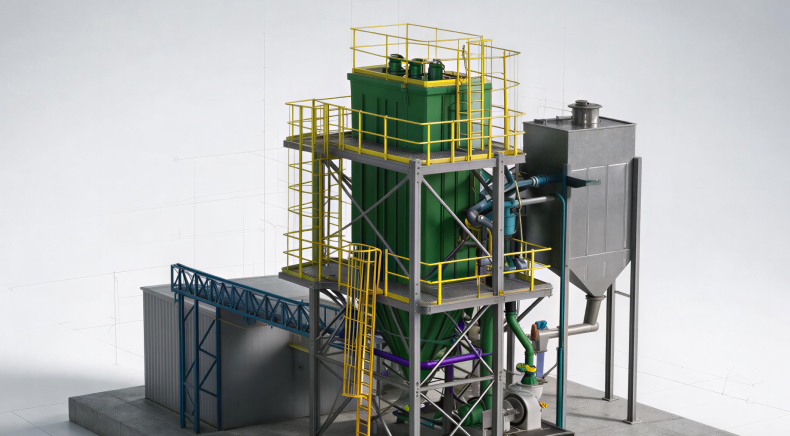
Pipelines are essential infrastructure for transporting vital materials such as oil, gas, water, and chemicals over long distances. They are critical to sectors like energy, agriculture, and chemical industries, ensuring raw materials are delivered efficiently and safely. Designing and engineering pipelines, however, is a complex endeavor. It involves meticulous planning, from selecting suitable materials to meeting regulatory requirements and overcoming environmental hurdles.
With projects often spanning thousands of kilometers, the process demands specialized expertise, innovative solutions, and a deep understanding of both engineering principles and industry-specific challenges to ensure safe, reliable, and cost-effective pipeline systems.
In this article, we will explore what is pipeline design, its types for different industries, key design considerations and standards, steps involved, simulation and optimization techniques, safety & risk management, sustainable practices and why choose Rishabh Pro Engineering with real life use case.
What is Pipeline Design?
Pipeline design involves the planning and creation of systems to transport liquids, gases, or solids over long distances. It includes determining the pipeline’s size, material, route, and the installation of necessary components like pumps, valves, and pressure regulators. Engineers must account for factors such as terrain, pressure requirements, safety standards, and environmental impact. Further, the design process also ensures that the pipeline can handle the expected flow rate and resist corrosion, fatigue, and external forces. A well-designed pipeline guarantees safe, efficient, and cost-effective transport of materials while meeting regulatory and operational needs.
Types of Pipelines For Different Industries
Here are the different types of pipelines used across various industries:
- Oil & Gas Pipelines: Transport crude oil, natural gas, and refined products across long distances. These pipelines can be underground or underwater, requiring robust design to handle high pressures.
- Water Pipelines: Used to supply fresh water to residential, agricultural, and industrial areas. These pipelines need to be durable and resistant to corrosion.
- Chemical Pipelines: Transport hazardous chemicals and liquids between manufacturing sites or storage facilities. These require careful material selection to prevent leaks or accidents.
- Slurry Pipelines: Carry a mixture of water and solids, often used in mining, coal transport, and wastewater treatment.
- Product Pipelines: Designed for refined petroleum products, including gasoline, diesel, and jet fuel, typically used in the energy sector for distribution.
Each industry requires specific pipeline design considerations based on the materials transported and environmental conditions.
Steps Involved In Pipeline Design And Engineering
Listed below are the core phases involved in this process;
1. Project Planning and Feasibility Analysis
Feasibility Studies
It examines the project’s economic, technical, and environmental viability. Key components of feasibility studies include:
- Economic Analysis: Evaluating the project’s cost-effectiveness, including capital and operational expenditures.
- Technical Feasibility: Assessing the technical requirements and challenges associated with the project, including route selection, material specifications, and construction methodologies.
- Environmental Impact Assessment: Identifying potential environmental impacts and developing mitigation strategies to minimize adverse effects.
Front End Engineering Design (FEED)
It provides a precise structure for the project, from conception to completion. It includes:
- Project Scope Definition: Clearly define the project’s objectives, deliverables, and boundaries.
- Cost Estimation: Providing a preliminary budget that accounts for all anticipated expenses.
- Timeline Development: Outlines a realistic project schedule, including major milestones and deadlines.
2. Detailed Engineering and Design
This process translates the FEED framework into actionable plans and specifications. It covers various engineering disciplines:
Civil and Structural Engineering
- Geotechnical and Geophysical Data Review: Analyzing soil and subsoil conditions to inform design decisions.
- Pipeline Construction Procedures: Developing step-by-step procedures for construction to ensure precision and safety.
- Foundation and Structure Layouts: Designing layouts for pipeline supports and structures.
- Material Specifications: Defining the materials and methods for constructing durable foundations and structures, including reinforced concrete and steel work.
- Earthwork and Excavation Procedures: Preparing the terrain for piping installation.
- Design Basis for Civil and Structural Components: Establish standards for all elements.
Mechanical Engineering
- Pipeline Profile and Alignment Drawings: Create detailed drawings depicting the pipeline’s route and alignment.
- Mechanical Design Reports: Providing comprehensive reports on the mechanical aspects of the pipeline, including stress analysis and material selection.
- Cathodic Protection Design: Implementing measures to prevent corrosion and extend the pipeline’s lifespan.
- Buoyancy Control Measures: Ensuring the pipeline remains stable in water-saturated environments through buoyancy control measures.
Electrical Engineering
- Electrical System Design: Developing the electrical infrastructure necessary for pipeline operations, including power supply and distribution.
- Grounding and Cable Management: Ensuring proper grounding and cable management to enhance safety and operational efficiency.
- Lighting and Electrical Layouts: Designing adequate lighting systems and electrical layouts for facilities and control rooms.
Instrumentation and Control Engineering
- Control System Design: Developing the control and monitoring systems required for pipeline operations.
- Instrumentation Layouts: Creating detailed layouts for instrumentation, including sensor placement and cable routing.
- Safety Systems: Designing alarm and shutdown systems to ensure safe operation under various conditions.
Corrosion Protection
The said pipelines may be laid underground and will encounter corrosion problems. Careful attention should be given to protect pipelines from being corroded for their long life. Various methods, like pipeline coating like 3LPE, can provide sacrificial anodes and ICCP system, i.e., impressed current cathodic protection.
3. Construction and Supervision Support
Construction Supervision
It is crucial to ensure that the project adheres to design specifications, timelines, and safety standards. Key activities include:
- On-site monitoring: Overseeing construction activities to ensure compliance with plans and specifications.
- Quality Control: Implementing quality control measures to verify that materials and workmanship meet specified standards.
- Safety Management: Enforcing safety protocols to protect workers and the environment.
Procurement and Supply Chain Management
Efficient processes are essential to source the necessary materials, equipment, and services. Key activities include:
- Vendor Selection and Evaluation: Assessing and selecting vendors based on quality, reliability, and cost.
- Request for Quotation (RFQ) Processes: Managing RFQs to ensure timely and cost-effective procurement.
- Contract Management: Overseeing contracts to ensure compliance with terms and conditions.
Commissioning and Start-Up
It involves testing and validating the pipeline’s performance before it becomes operational. Key activities include:
- System Testing: Conducting rigorous tests to verify the functionality and safety of the pipeline and its associated systems.
- Performance Validation: Ensuring that the pipeline meets all operational requirements and performance standards.
- Handover Procedures: Transferring pipeline control to the operational team, along with detailed documentation and training.
Maintenance and Monitoring
They are crucial to ensure the pipeline’s continued safe and efficient operation. Key activities include:
- Routine Inspections: Conducting regular inspections to identify and address potential issues before they escalate.
- Maintenance Programs: Developing and implementing maintenance programs to ensure the longevity and reliability of the pipeline.
- Monitoring Systems: Utilizing advanced monitoring systems to continuously track the pipeline’s performance and detect any anomalies.
4. Environmental and Regulatory Compliance
Environmental Protection
Key activities include:
- Environmental Impact Assessments (EIA): Conduct thorough EIAs to identify potential environmental impacts and develop mitigation strategies.
- Sustainable Practices: Implementing sustainable practices throughout the project to minimize environmental footprints, such as using environmentally friendly materials and methods.
- Restoration Plans: Develop plans to restore affected areas to their original state post-construction.
Regulatory Compliance
Key activities include:
- Permitting and Approvals: Obtaining all necessary permits and approvals from relevant authorities.
- Regulatory Reporting: Maintaining accurate records and reporting to regulatory bodies as required.
- Compliance Audits: Conduct regular audits to ensure ongoing compliance with all applicable regulations.
Pipeline Design Considerations and Standards
Here are some of the key considerations;
Pipe Thickness:
- Calculate based on standards, codes, and service requirements, including corrosion allowance.
- Use concrete anchor blocks at direction changes to counteract outward thrust from fluid velocity changes.
Parallel Pipelines Clearance:
Ensure minimum clearance is the largest of:
- O.D. of larger pipe dia over insulation.
- Specific requirements for working space, ROW space, road edges, buildings, etc.
Surge Effect:
- Address surge pressure induced by valve shut-off at the receiving end.
- Determine valve closing time with proper communication between supplier and receiver.
- Consider surge tanks or vessels at both ends to mitigate Fluid-Hammer effects.
Pigging:
- Perform pigging for pipelines carrying different products periodically to flush and prepare the line for new fluids.
Pipeline on Brackets Attached to Bridges:
- Assess vibration levels (frequency and amplitudes) from traffic.
- Avoid resonance by ensuring pipe frequencies do not match bridge frequencies.
- Provide lateral spring-loaded supports at random intervals for damping.
Long Expansion Loops:
- Consider thermal expansion and contraction due to temperature variations.
- Perform stress analysis and ensure proper support arrangements.
- Use rollers for free longitudinal movement and loose clamps to prevent slipping.
Erection Stresses:
Anticipate local and excessive stresses in following conditions during handling of pipes:
- Local deformation/bending from crane use.
- Deformation when pulling pipe along trenches or sleeves.
- Submarine portion lowering, causing local deformations.
- Vibrations during hydro testing of unsupported lengths.
- Compression or tension effects when crossing hillocks.
Corrosion Allowance:
- Specify extra corrosion allowance for long-distance pipelines.
- Provide a minimum of 3 mm allowance or as specified, whichever is greater, to prevent leaks.
Pipeline Design Codes and Standards
These pipelines must adhere to various codes and standards to ensure their safety, reliability, and environmental protection. Here are some of the key codes and standards commonly used:
- ASME B31.4: Outlines the liquid pipeline design, construction, and operation standards.
- ASME B31.8: Sets the gas pipeline design, construction, and operation standards.
- API 5L: Issued by the American Petroleum Institute (API), this standard governs the manufacture of line pipes that transport oil, gas, and other fluids. It includes material selection and quality management guidelines.
- ISO 3183: This international standard specifies the requirements for producing seamless and welded steel pipes used in pipelines for transporting liquids and gases.
- ANSI/ASNT CP-189: It provides guidelines for the qualification and certification of non-destructive testing (NDT) personnel, which is crucial for pipeline inspections and maintenance.
- API 1169: It sets the standards for the certification of pipeline inspectors, covering aspects such as pipeline construction, operations, and maintenance.
- PHMSA Pipeline Safety Regulations: Published by the Pipeline and Hazardous Materials Safety Administration (PHMSA) in the United States, these regulations establish minimum safety standards for the design, construction, and operation of pipelines.
Pipeline Simulation & Optimization Techniques
Simulation and optimization are vital steps in modern pipeline engineering. They help engineers design systems that perform efficiently, safely, and economically under a variety of operating conditions.
Below are key techniques and their roles:
- Hydraulic Simulation: Models fluid flow within the pipeline to analyze pressure, temperature, and velocity variations. It helps identify potential bottlenecks, pressure drops, or surge conditions before construction.
- Transient Flow Analysis: Studies how a pipeline responds to changes such as valve closures, pump failures, or sudden demand shifts. This prevents issues like water hammer or pressure surges that can damage equipment.
- Thermal Simulation: Evaluates heat transfer along the pipeline, especially important for transporting temperature-sensitive fluids like crude oil or liquefied gases. It helps determine insulation and heating requirements.
- Steady-State vs. Dynamic Modeling: Steady-state simulations examine pipeline behavior under constant conditions, while dynamic modeling accounts for fluctuating operations to ensure long-term reliability.
- Optimization Algorithms: Used to minimize operational costs by balancing energy use, pump configurations, and flow rates while maintaining safety margins.
- Leak Detection and Integrity Monitoring: Simulation tools help detect abnormal flow patterns that could indicate leaks or corrosion, improve safety and reduce environmental risks.
- Capacity Expansion Planning: Enables engineers to test “what-if” scenarios, predicting how system performance changes with higher throughput or new connections.
Safety & Risk Management in Pipeline Design Projects
Ensuring safety is the foundation of every pipeline design project. Effective risk management minimizes potential hazards, safeguards people and the environment, and ensures long-term pipeline integrity.
Key considerations include:
- Comprehensive Risk Assessment: Identifying potential failure points like leaks, corrosion, or pressure surges early in the design phase.
- Material Selection: Choosing materials with the right strength, corrosion resistance, and durability for varying terrains and fluid types.
- Design Standards Compliance: Adhering to global and regional safety standards such as ASME, API, and ISO to ensure reliability.
- Route Planning: Avoiding environmentally sensitive areas, seismic zones, and densely populated regions.
- Pressure and Flow Control: Incorporating safety valves, monitoring systems, and redundancy to manage flow fluctuations.
- Emergency Response Planning: Designing for rapid isolation and containment in case of failures.
- Regular Maintenance & Inspection: Supporting long-term operational safety through smart monitoring and predictive maintenance tools.
Sustainable Practices in Pipeline Engineering
Modern pipeline engineering focuses on minimizing environmental impact while maintaining operational efficiency. Sustainable practices are now integral to every stage of the pipeline lifecycle — from design and construction to operation and maintenance.
Key approaches include:
- Material Optimization: Using recyclable and corrosion-resistant materials to extend pipeline life and reduce waste.
- Energy Efficiency: Incorporating energy-saving technologies such as variable speed pumps and smart monitoring systems.
- Leak Detection Systems: Implementing real-time monitoring to quickly identify and control leaks, preventing environmental damage.
- Route Optimization: Designing routes that avoid sensitive ecosystems, water bodies, and populated areas to reduce ecological disruption.
- Emission Reduction: Adopting low-carbon construction techniques and renewable energy sources for operations.
- Water Conservation: Reusing water in hydrostatic testing and adopting closed-loop systems.
- Lifecycle Assessment: Evaluating the environmental footprint at each project phase to enhance sustainability performance.
Why Choose Rishabh Pro Engineering for Your Pipeline Design & Engineering Project?
Our approach involves working closely with clients at every stage of the pipeline’s lifecycle, from feasibility studies and design to construction and commissioning. We use the latest software and simulation tools to conduct stress analysis, hydraulic design, and risk assessments, ensuring that our clients receive safe, efficient, and cost-effective solutions.
Listed below are some of the points around how we help our global clients;
- Multidisciplinary Expertise: Pipeline projects demand collaboration across multiple engineering disciplines. At Rishabh Pro Engineering, our teams combine mechanical, civil, electrical, instrumentation, and environmental expertise to deliver integrated and optimized solutions.
- End-to-End Support: We partner with clients throughout the project lifecycle — from concept and feasibility studies to detailed design, construction support, and commissioning. This ensures consistency, accuracy, and efficiency at every stage.
- Advanced Engineering Tools: Our engineers utilize industry-leading software for hydraulic design, stress and flexibility analysis, and 3D modeling. These tools help us visualize potential challenges early and develop precise, reliable designs.
- Regulatory and Environmental Compliance: We understand the critical importance of meeting industry codes, standards, and environmental norms. Our team ensures that every design adheres to local and international regulations.
- Cost-Efficient and Safe Solutions: With a strong focus on safety, reliability, and constructability, we deliver designs that minimize risk and optimize material and operational costs.
- Collaborative Approach: We believe in open communication and close collaboration with clients, ensuring that their project goals, timelines, and budgetary needs are consistently met.
Real Life Use Case
Title:
Detailed Engineering For Gas Pipeline Project
Client:
A Europe‐based leading cement manufacturer (Top 3 globally)
Project Overview:
The client aimed to utilize lean gas as fuel by constructing a ~4.0 km, 8″ pipeline from a pressure-regulating & metering station to a new distribution facility in West Africa.
Scope of Work:
- FEED: defined project scope, cost & timeline, and developed the design basis.
- Detailed engineering across process (PFDs, P&IDs, relief & process calculations), civil/structural (geotechnical data, foundations, earthwork), electrical (load calculations, cable trays, lighting, grounding), pipeline (profiles, mechanical reports, cathodic protection, crossings) and instrumentation (data sheets, control room layout, integration).
- Construction supervision and procurement support (RFQs, materials & equipment management).
Challenges Addressed:
The project required integration across multiple disciplines, strict adherence to safety/environmental/regulatory standards, reliable delivery of gas under fuel‐quality conditions, and crossing complex terrains including roads/river crossings. Multidisciplinary coordination and comprehensive design tools ensured a safe, efficient and cost‐effective solution.
Final Words
Pipeline engineering form the backbone of today’s industrial infrastructure, enabling the safe and efficient transport of vital resources like oil, gas, water, and chemicals across vast regions. Each project demands a blend of technical precision, environmental responsibility, and unwavering focus on safety. From feasibility studies and route selection to detailed design, construction, and commissioning, every stage plays a key role in ensuring reliable operations. With the right pipeline engineering services partner, challenges like complex terrains, regulatory compliance, and long-term system integrity are effectively managed. At Rishabh Pro Engineering, we deliver robust, sustainable, and high-performing pipeline solutions built to last.